
Alyssa Thomas Suspension After Caitlin Clark Throat Contact Turns Mercury–Fever Game Into WNBA Officiating Flashpoint
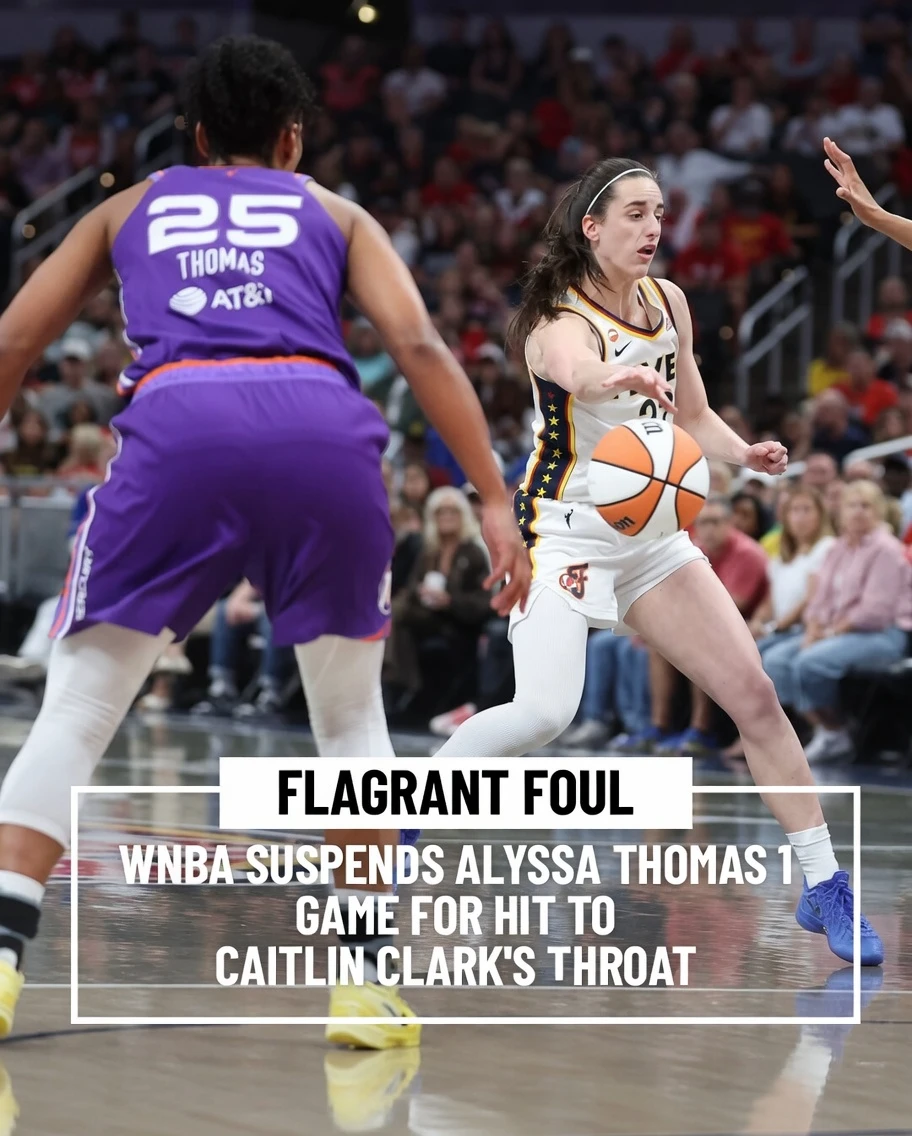
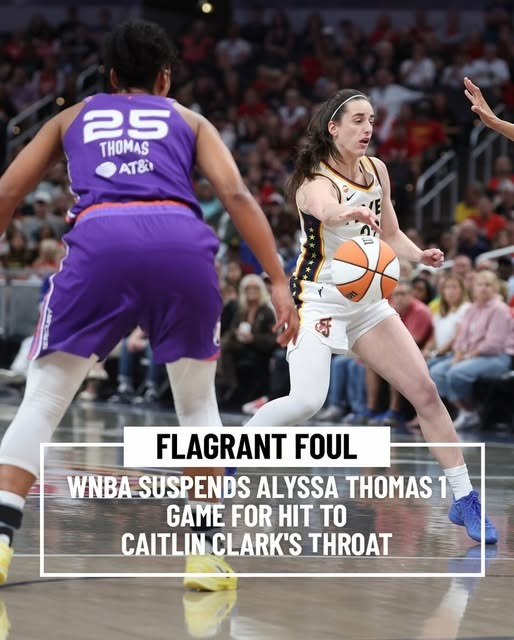
The WNBA has stepped in after one of the most controversial moments of the Mercury–Fever matchup, suspending Phoenix’s Alyssa Thomas for one game after she made contact with her fist to Caitlin Clark’s throat during Wednesday night’s game against Indiana.
But the suspension itself is only part of the story.
The larger issue is what happened before the league reviewed the play.
No foul was called on the floor.
That detail has turned the incident from a single disciplinary ruling into another heated debate about officiating consistency, player safety, and the physical treatment Caitlin Clark continues to face as one of the league’s most watched stars.
The play occurred with 6:52 remaining in the second quarter. During a physical sequence, Thomas made contact with Clark’s throat area. Officials did not call a foul during live action, but the WNBA later reviewed the incident and ruled that it was a non-basketball act. The league upgraded the play to a Flagrant Foul 2 and issued Thomas a one-game suspension.
That retroactive decision immediately raised one obvious question.
If the play was severe enough to warrant a Flagrant 2 and a suspension after review, how was it missed in real time?
That is the question now hanging over the league.
Fever head coach Stephanie White did not hide her frustration after the game. Her reaction was sharp, direct, and emotional. She called the missed call “egregious” and made it clear that she believed the officials had to recognize and punish that level of contact during the game, not only after the league office reviewed it later.
For White, this was not just about defending one player.
It was about standards.
Clark has spent much of her WNBA career playing through aggressive, physical defense. That comes with the territory for a star guard. Defenses pick her up early, chase her through screens, body her on drives, and try to disrupt her rhythm before she can bend the game with her shooting and passing.
That kind of pressure is expected.
But there is a difference between physical basketball and dangerous contact.
That is where this incident crossed into a much larger conversation.
When contact reaches the throat area, and when the league later determines it was reckless enough to merit a suspension, the debate is no longer simply about tough defense. It becomes about player protection. It becomes about whether officials are seeing enough, reacting quickly enough, and creating a safe competitive environment before emotions spiral.
The Mercury–Fever matchup already carried tension. The two teams had played earlier in the week in a heated game that included multiple technical fouls and an ejection. By the time Wednesday’s game arrived, everyone knew the emotional temperature around this matchup was high.
May you like
nga.A simple skit about a vacuum cleaner suddenly turned into a television disaster
That made the no-call even more frustrating for Indiana.
White’s point was simple: after everything that had already happened between these teams, officials needed to be especially aware of escalating physicality. Instead, a moment that the league later punished was allowed to pass during the game without a whistle.
That disconnect is what fueled the backlash.
Phoenix ultimately won the game 111–109, but the final score has almost become secondary to the controversy. The result was dramatic, close, and competitive, yet the conversation after the game shifted heavily toward the officiating and Clark’s physical condition.
Clark finished with 19 points and eight assists in just 20 minutes, showing again how quickly she can impact a game even in limited time. But she left in the third quarter while dealing with a back issue. She had already appeared uncomfortable earlier in the game, including after a fall on a three-point attempt, and returned to the bench wearing a wrap around her back.
That context made the Thomas incident feel even more alarming.
It is not clear whether the throat contact was directly connected to Clark’s later exit. But when a player is already absorbing heavy contact and then leaves with a physical issue, the concern around player safety naturally grows.
For Indiana, the frustration is layered.
There is the frustration of losing a two-point game.
There is the frustration of seeing Clark leave early.
There is the frustration of a key no-call being corrected only after the game.
And there is the broader frustration of feeling that Clark does not always receive the same whistle that a player with her offensive burden should expect when defenders cross the line.
This is where the WNBA faces a difficult but important challenge.
The league wants competitive, physical basketball. It does not want every possession interrupted by whistles. Fans and players both understand that the professional game must allow toughness, body contact, and defensive intensity.
But physicality cannot become an excuse for missed dangerous contact.
Especially when the league is experiencing unprecedented attention, every officiating decision is under more scrutiny. Plays are clipped, replayed, slowed down, debated, and compared across games within minutes. When a missed call later becomes a suspension, the league’s postgame correction may be necessary, but it also highlights the original problem.
Retroactive discipline can punish the player.
It cannot restore the possession.
It cannot change the flow of the game.
It cannot undo the message sent in the moment when no whistle came.
That is why this situation feels so important.
For Thomas, the suspension means she will miss Phoenix’s next game against the Toronto Tempo. For the Mercury, it removes a key veteran presence from the lineup. For the Fever, it confirms that the league agreed the play crossed a serious line.
But for the WNBA as a whole, the incident raises a bigger question.
How does the league protect its players while preserving the intensity that makes the game compelling?
That balance matters for everyone, not only Caitlin Clark.
Still, Clark’s visibility makes these moments impossible to ignore. She is one of the most recognizable players in basketball. Her games draw massive attention. Her highlights spread quickly. Her physical treatment becomes a league-wide discussion because so many people are watching.
That attention can be uncomfortable, but it also forces accountability.
The WNBA cannot afford for fans, coaches, or players to believe that dangerous contact is being missed until after the fact. If a play is later ruled a Flagrant 2, there must be serious examination of why it was not identified during the game.
Stephanie White’s anger reflects that concern.
She is not simply arguing for a softer whistle for Clark. She is arguing that the league must call obvious dangerous contact consistently, especially in games where the emotional temperature is already high.
That is a fair conversation for any professional sport.
The Thomas suspension closes one disciplinary chapter, but it does not end the debate. If anything, it makes the debate louder.
Because the WNBA has now confirmed that the play deserved serious punishment.
The next challenge is making sure plays like it do not go unnoticed when they happen.
For Clark, the focus now shifts to health and recovery. For the Fever, it shifts to protecting their star while continuing to compete through a difficult schedule. For the Mercury, it means moving forward without Thomas for one game and managing the fallout from a nationally discussed incident.
But for the league, this is a defining moment.
Not because of one suspension.
Because of what the suspension revealed.
A dangerous play was missed in real time.
The league corrected it later.
Now everyone is waiting to see whether the WNBA can fix the larger issue before the next controversy arrives.