
Behind the Pain: Understanding Painful Cysts Behind the Ear and Why Prompt Treatment Matters

A Small Lump Can Turn Into a Serious Problem
Many people ignore a small lump behind the ear, assuming it will disappear on its own. In reality, what begins as a tiny bump can develop into a painful, swollen cyst or abscess if bacteria enter the area. Once infection sets in, the skin may become red, tender, and filled with thick pus, making even simple movements like sleeping or turning the head uncomfortable.
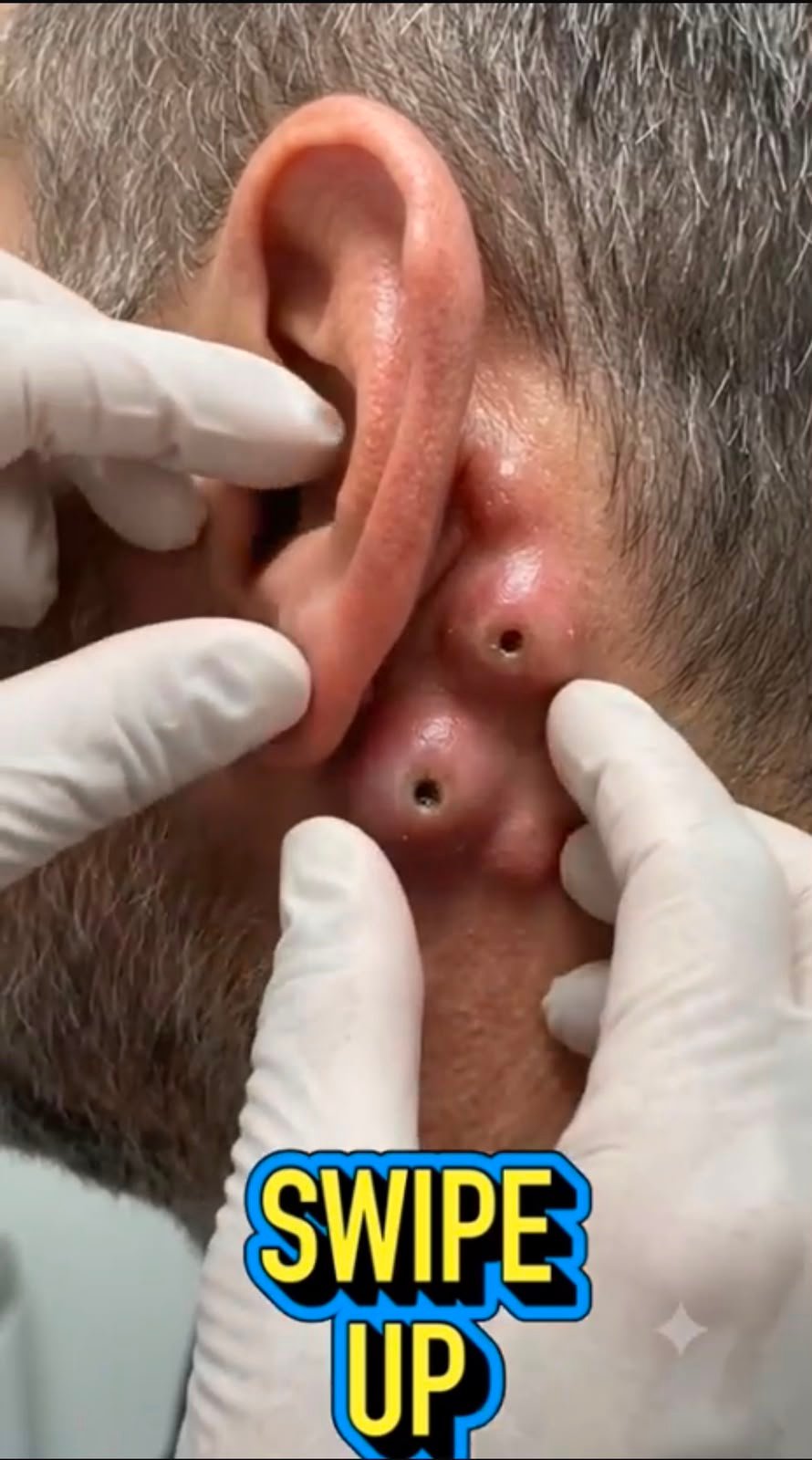
The image appears to show a large inflamed swelling behind the ear with drainage openings, which may be consistent with an infected skin cyst or abscess. While the exact diagnosis cannot be confirmed from an image alone, this type of condition requires medical evaluation rather than home treatment.
What Is an Infected Cyst?
An infected cyst is a pocket beneath the skin that becomes filled with fluid, keratin, or pus after bacteria enter the area. Behind the ear is a common location because the skin contains numerous oil glands and hair follicles.
As pressure builds inside the cyst, it can become:
- Red and swollen
- Warm to the touch
- Extremely painful
- Filled with yellow or white drainage
- Difficult to ignore due to constant discomfort
Without treatment, the infection may continue to spread into surrounding tissue.
Common Symptoms
People with an infected cyst behind the ear often experience:
- Rapidly growing lump
- Severe tenderness
- Red or shiny skin
- Thick yellow or foul-smelling discharge
- Fever in more serious infections
- Difficulty sleeping on the affected side
If these symptoms appear, medical attention should not be delayed.
What Causes These Cysts?
Several factors may contribute to cyst formation, including:
Blocked Oil Glands
Sebaceous glands can become blocked, trapping keratin beneath the skin.
Hair Follicle Infection
Bacteria entering damaged hair follicles may trigger inflammation.
Minor Skin Injury
Small cuts, shaving irritation, or scratches may introduce bacteria.
Previous Untreated Cysts
Older cysts can become infected after remaining under the skin for months or years.