
A Shocking Skin Infestation: What Happens When a Larva Develops Beneath the Skin?
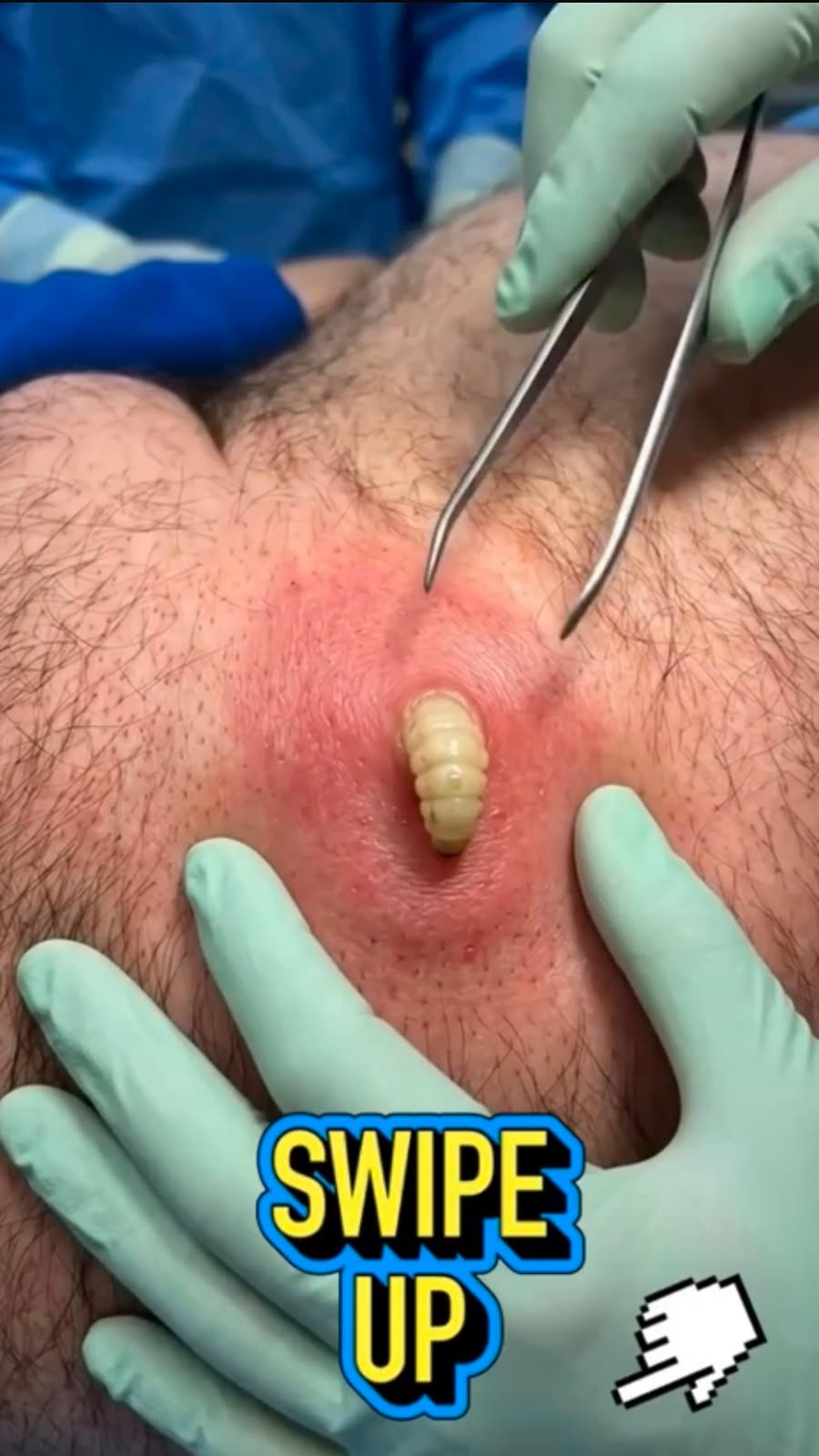
Some medical images are difficult to look away from—and this one is certainly unusual. The photograph shows a raised, inflamed area of skin with what appears to be a pale, segmented larval structure protruding from the center. Medical professionals use the term cutaneous myiasis for certain infestations in which fly larvae develop in or beneath human skin.
While the image is striking, the exact diagnosis cannot be confirmed from a photograph alone. A qualified healthcare professional would need to examine the lesion and consider the person’s symptoms, travel or environmental exposure, and medical history.
What Is Cutaneous Myiasis?
Cutaneous myiasis occurs when fly larvae infest living tissue or develop within a skin lesion. One form, called furuncular myiasis, can resemble a boil or infected bump.
A typical lesion may appear as a:
- Red, swollen bump
- Painful or tender area
- Small opening in the center
- Lesion that may drain fluid
- Bump associated with a sensation of movement or irritation
The central opening can allow the larva to obtain air while remaining beneath the skin.
How Can It Happen?
Certain flies can deposit eggs on or near exposed skin, particularly in environments where people have contact with insects or contaminated materials.
Risk can increase with circumstances such as:
- Travel to areas where myiasis-causing flies are common
- Outdoor exposure
- Open or poorly protected wounds
- Inadequate wound hygiene
- Sleeping or spending time in environments with significant insect exposure
Importantly, this is not simply a matter of being “dirty.” Exposure to the relevant insects and environmental conditions is a major factor.