
A Wasp Attached to the Skin: What Happens After an Unexpected Insect Sting?
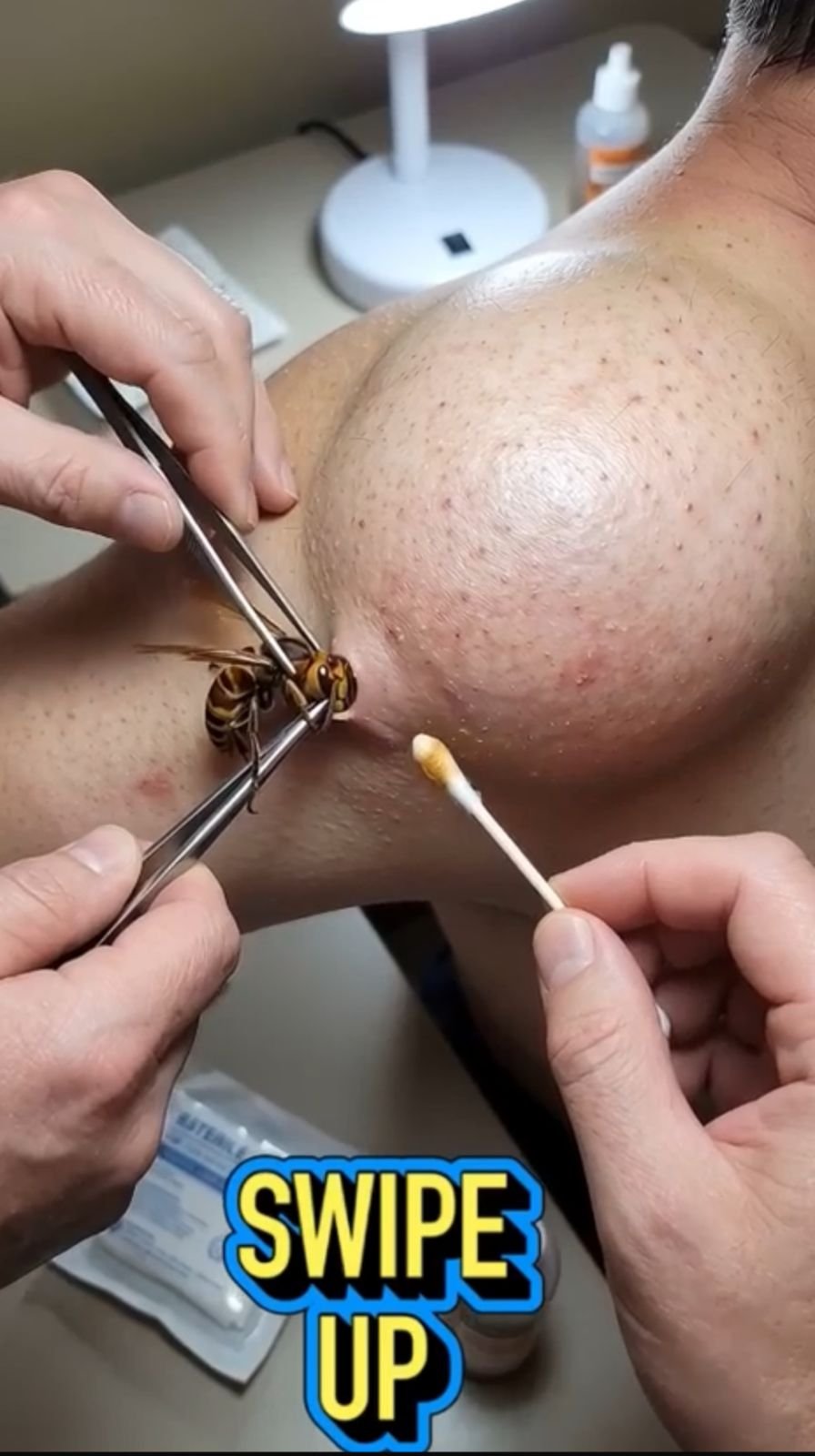
A close-up clinical image can make an ordinary outdoor accident look incredibly dramatic. In this photograph, a wasp-like insect is being carefully removed from the skin with medical instruments, while another person appears to be cleaning the surrounding area.
The scene raises an obvious question: What should you do if a wasp or similar stinging insect becomes attached to your skin?
Although the exact circumstances behind this image cannot be confirmed from the photograph alone, insect stings can cause anything from brief localized discomfort to significant allergic reactions.
Why Can a Wasp Sting Be So Painful?
Wasps and related stinging insects can inject venom through a stinger. The venom triggers an inflammatory response, which can lead to:
- Sharp or burning pain
- Redness around the sting
- Local swelling
- Itching or tenderness
- Warmth around the affected area
For most people, these symptoms remain localized and gradually improve.
However, the body’s response can vary significantly from one person to another.