
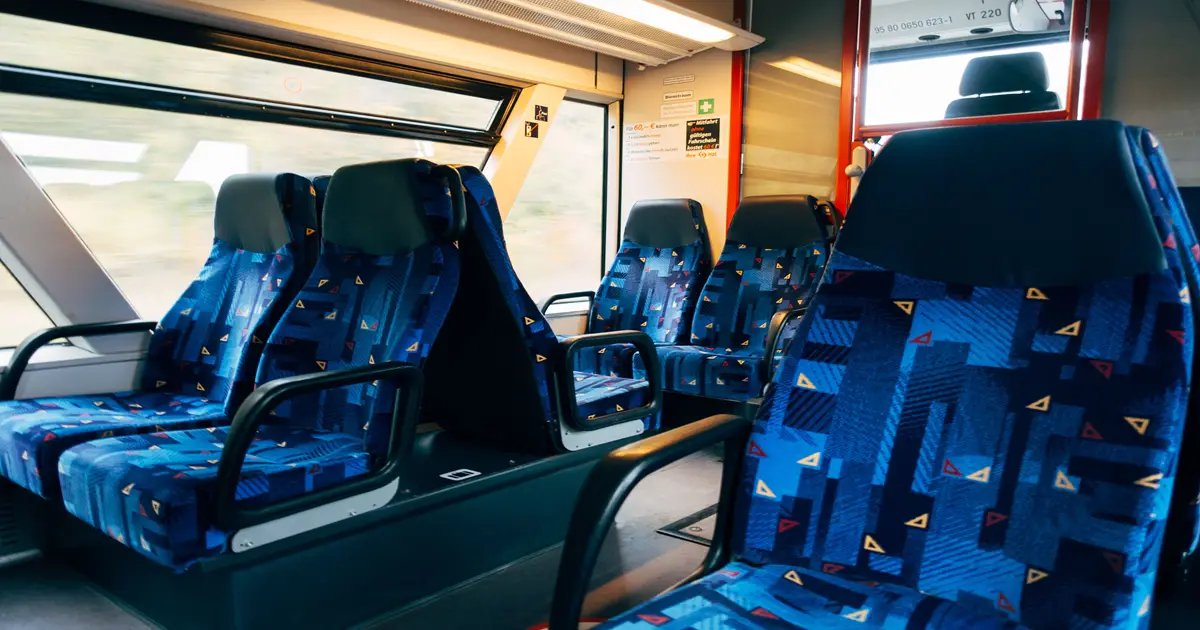
The Surprising Reason You’ll Never Find a Seat Belt on a Train
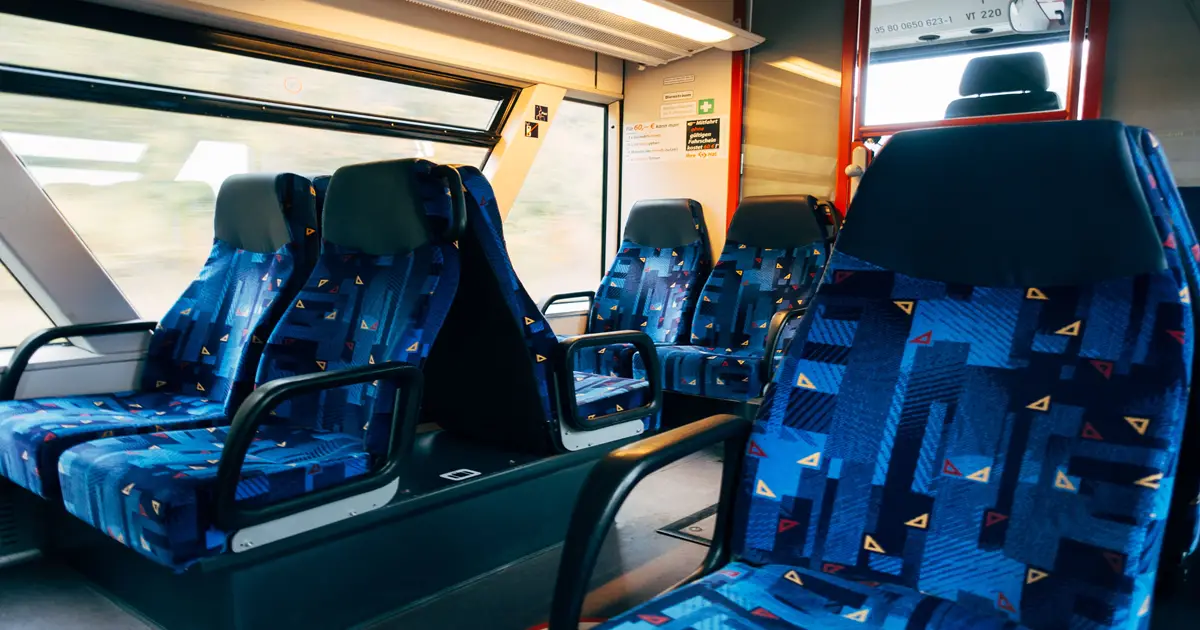
Most passengers never notice that trains don’t have seat belts, right up until the moment they wonder why every other way of getting somewhere insists on one. Cars buckle you in. Planes do it twice, at takeoff and landing. Even the airport shuttle bus has a lap belt tucked into the seat. Yet climb aboard a passenger train, including a 200-mph bullet train, and you get a wide, upholstered seat with nothing to strap you down. It looks like an oversight. In fact, it is closer to the opposite.
The short answer is that a seat belt would not make a train safer, and in the accidents trains actually have, it could do harm. That reasoning is worth walking through. This is because it flips the instinct most of us carry from a lifetime in cars.
Why a Seat Belt Could Make a Train Crash Worse
The logic hinges on what usually goes wrong on a railway. Trains rarely stop the way a car does in a head-on collision. The common scenarios are sudden stops and derailments. In these situations, forces can come from several directions at once and a carriage may tip, twist or leave the rails entirely.
It is believed that a lap belt during a train crush can pin a passenger to a seat that is itself being thrown around. In a derailment, being locked to a fixed point can expose a body to worse impact injuries than being free to brace or shift with the movement.
It is a counterintuitive claim, and the honest version keeps the attribution where it belongs. The Federal Railroad Administration has spent decades researching occupant protection on trains, and its work points toward protecting passengers through seat design rather than restraints. The specific point about belts increasing derailment injuries is best credited to the NTSB expert. It should not be treated as one settled, universal law of engineering.
How Train Seats Are Built to Protect You Instead
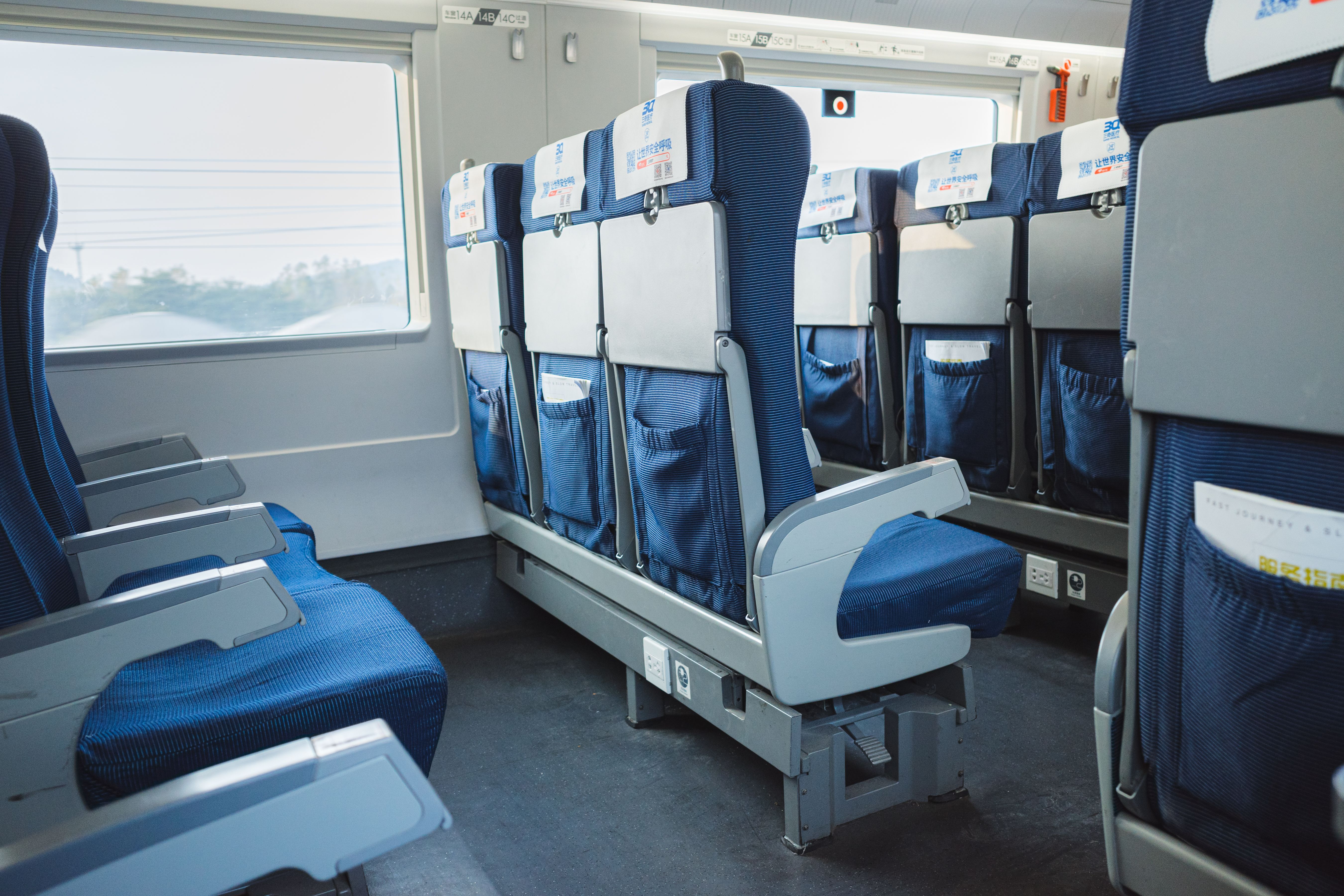
If the belt is out, something has to catch a passenger who is thrown forward in a sudden stop. That job goes to the seat in front of you.
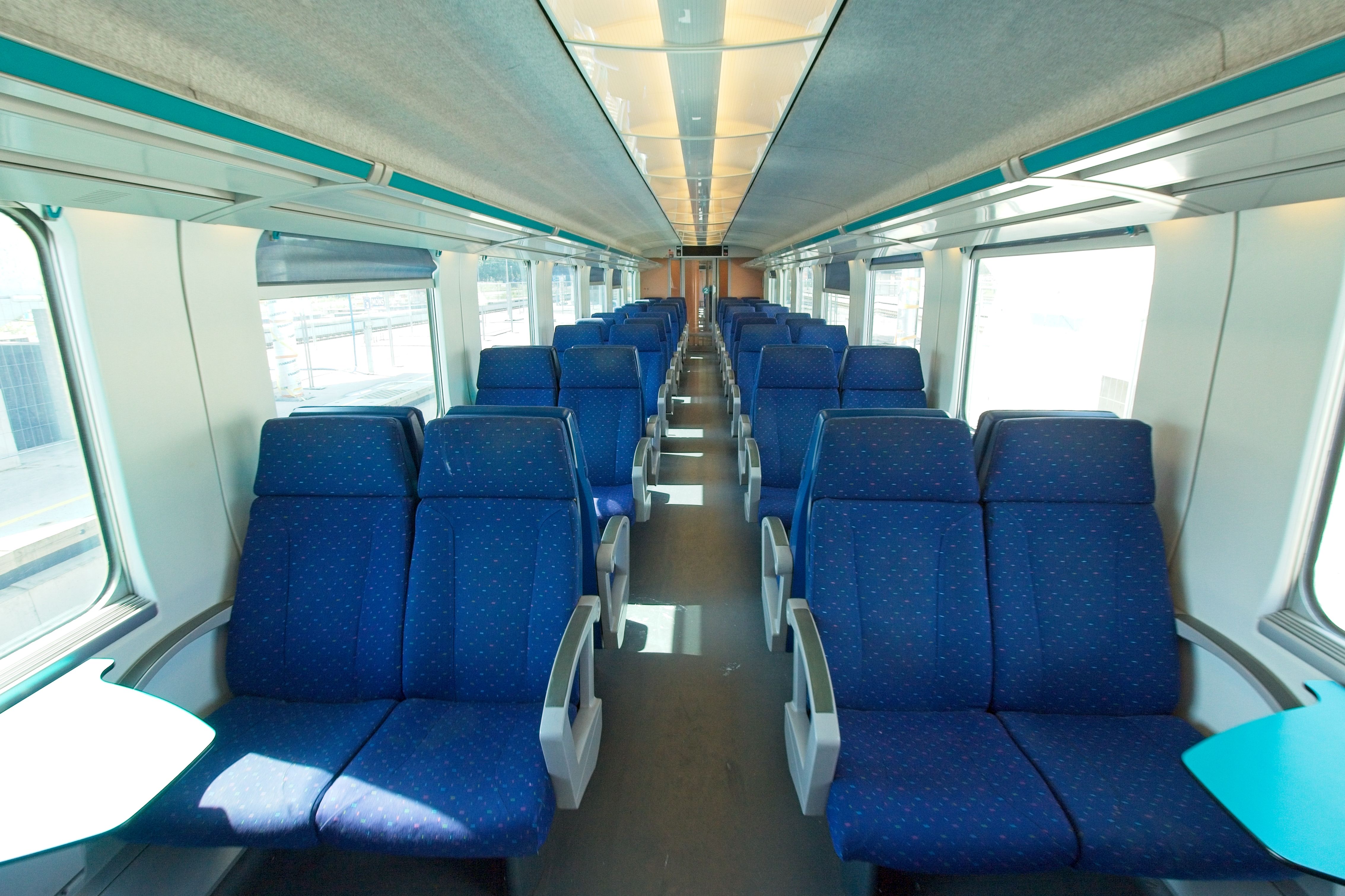
The principle is called compartmentalization. Train seats are set close together, built tall, and padded to absorb energy. In a hard deceleration, a passenger moves forward a short distance and meets a high, cushioned seat back that spreads the force across the body instead of concentrating it. The gap is small on purpose. This ensures nobody builds up much speed before being stopped by something designed to give way in a controlled fashion.
School buses use the same idea, which is why they also skip belts on most seats. FRA crashworthiness research has treated the passenger space as a system. Seats, spacing and structure work together, rather than relying on a strap. It is the same broad instinct behind why a plane insists your seat is upright when a train never asks. Each mode protects you in the way its own crashes demand.
What Makes Trains Different From Cars and Planes
Physics does a lot of the work here. A train is enormously heavy and runs on a fixed track, which means it cannot swerve into a tree or change direction the way a car can. However, trains can flip or overturn if they exceed safe curving speeds or experience severe collisions. When it slows, even sharply, it usually decelerates more gradually than a car in a crash. The violent, instantaneous force a seat belt is built to counter is far less common.

That difference is exactly why a car belt is engineered the way it is, down to details like the fabric loop on a driver’s seat belt. The restraint suits the vehicle. Trains are not cars, and they are not planes either.
The reasoning does get more debated at the top of the speed range. High-speed rail introduces forces closer to aviation, and safety design there is context-dependent rather than one-size-fits-all. Even so, the passenger seat, not the belt, remains the front line.
So the next time the aisle feels oddly open on a train, that empty space and the tall seat in front of you are quietly doing a job a buckle never could.