
Unlocking the Mystery Behind Ear Blackheads: Causes, Myths, and Safe Treatment
 Unlocking the Mystery Behind Ear Blackheads: Causes, Myths, and Safe Treatment
If you’ve ever scrolled through social media and come across viral videos showing giant extractions from inside a person’s ear, you aren’t alone. Millions of viewers are equal parts fascinated and horrified by these clips. At first glance, a cluster of deep, dark spots inside the ear canal or outer cartilage looks like a bizarre, rare disease.
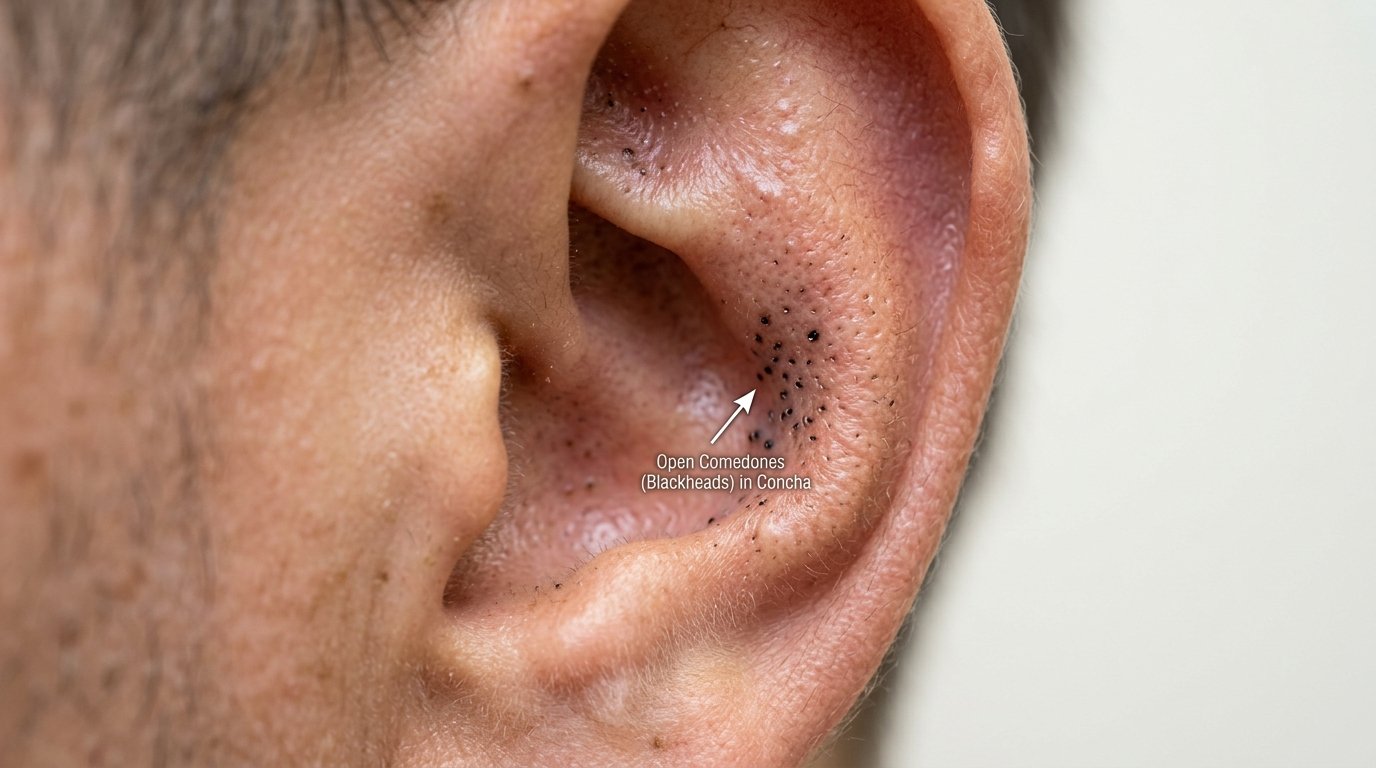
However, medically speaking, these are usually Giant Ear Comedones (Severe Blackheads), Dilated Pores of Winer, or in rare clinical cases, a rare skin condition called Nevus Comedonicus.
1. What Exactly Are You Seeing in These Videos?
When a pore becomes clogged in the delicate folds of the ear, it develops into a comedo. Unlike standard facial pimples, ear blackheads often go unnoticed for months or even years because they are hidden from plain sight.
Here is a breakdown of the primary conditions that create this appearance:
-
Giant Ear Comedones (Blackheads): Skin pores get packed with a mix of excess sebum (natural skin oil), dead keratin cells, and ambient dust. As the plug reaches the pore opening, exposure to air causes it to oxidize and turn deep black.
-
Dilated Pore of Winer: This is essentially an enlarged single pore that acts like a “plugged funnel.” It accumulates keratinized material over time, creating a large, solid mass that looks like a small stone or seed inside the ear.
-
Nevus Comedonicus: A rare, benign skin nevus (birthmark-like variation) where hair follicles fail to develop normally, resulting in closely grouped, honeycomb-like clusters of dilated pores jammed with keratin plugs.
2. Why Do Blackheads Form Inside the Ear?
The skin inside and around your ears contains hundreds of sebaceous (oil) glands and hair follicles, just like the skin on your face. Because the ear cartilage has complex curves, crevices, and narrow depressions, it creates a prime environment for debris buildup.
Primary Root Causes:
-
Trapped Sebum & Ear Wax: Excessive oil production can mix with migration-prone ear wax near the outer canal, forming dense plugs.
-
Infrequent Cleaning: During daily face washing or showering, the outer ear folds (the concha and antihelix) are frequently overlooked.
-
Overuse of Earbuds & Headphones: Tight-fitting in-ear headphones compress the skin, block natural air circulation, and press dirt, sweat, and hair products deep into open pores.
-
Hormonal Fluctuations: Spikes in androgen hormones increase overall sebum density, leading to rapid congestion inside larger pores.
3. The Medical Risks of DIY Extraction
Watching tweezers pull out long plugs in viral videos makes it tempting to grab a pair of tweezers or a safety pin and try it at home. Dermatologists strongly advise against self-extraction in the ear region.
Why DIY Extraction is Dangerous:
-
Cartilage Infection (Perichondritis): The skin over ear cartilage is extremely thin. Sharp tools can breach the cartilage lining, leading to severe bacterial infections that can permanently deform the ear structure.
-
Ruptured Pore Walls: Squeezing forcefully pushes the plug deeper into the dermis rather than outward, causing painful cysts and severe inflammation.
-
Permanent Scarring: Aggressive picking leaves gaping, crater-like holes in the ear that readily collect dirt and re-clog continuously.
4. Professional Treatments & Prevention Tips
If you or someone you know has deep ear comedones, professional removal by a dermatologist or an ENT specialist is the safest path.
Professional In-Office Procedures:
-
Sterile Extraction: Using medical-grade comedone extractors and microscopic precision tools to lift the entire keratin core without damaging adjacent tissue.
-
Topical Retinoids: Prescription-strength vitamin A derivatives (like Tretinoin or Adapalene) help accelerate skin cell turnover, loosening deep-seated plugs naturally.
-
Chemical Peels & Salicylic Cleansers: Medical-grade beta-hydroxy acids (BHA) dissolve oil inside blocked pores.
💡 Daily Habits to Prevent Ear Congestion
-
Daily Hygiene Routine: Gently wash the outer ear and the area behind the ear pinna with a mild facial cleanser every time you shower.
-
Sanitize Audio Gear: Wipe down your silicone earbud tips, over-ear pads, and hearing aids with alcohol wipes at least once a week.
-
Avoid Heavy Hair Products Near the Ears: Keep heavy pomades, hair oils, and hairsprays away from the sides of your face and ears, as these products easily clog surrounding skin pores.
Final Takeaway
While viral videos make ear extractions look like a terrifying disease, they are simply severe cases of trapped skin oil and dead cells. By practicing good hygiene and leaving extractions to trained medical professionals, you can keep your ears clean, healthy, and infection-free!