
😱 Dozens of Tick-Like Parasites Clustered on the Ear: Why Immediate Removal Matters

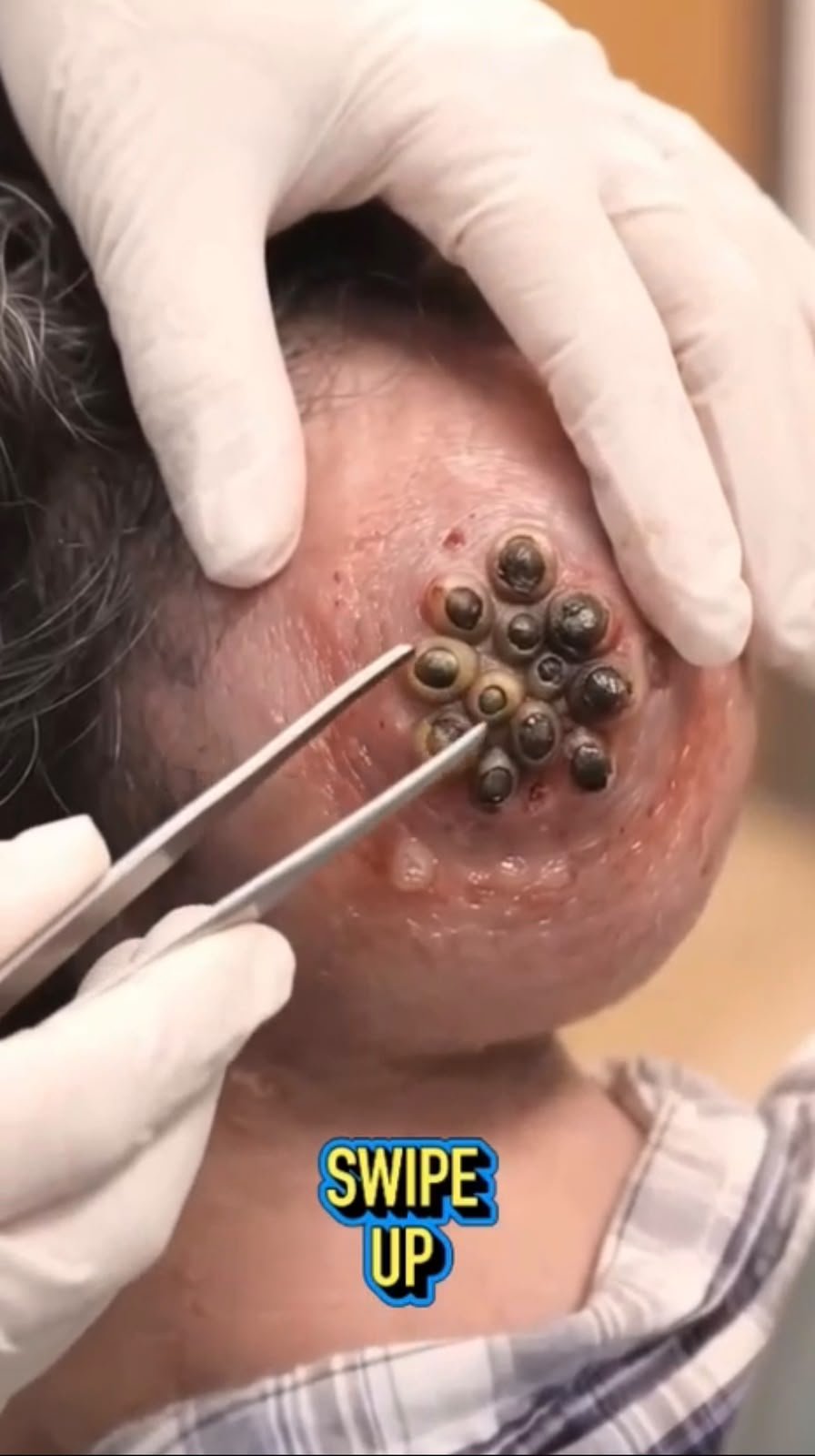
The image shows a large cluster of dark, rounded, tick-like organisms attached to the skin around the ear, while a healthcare professional carefully works around them with forceps.
The appearance is striking, but a photograph alone cannot confirm the exact species or even definitively establish that every object shown is a tick. If these are attached ticks, however, prompt removal is important because ticks can transmit disease-causing organisms. CDC
🕷️ Why Can So Many Ticks Gather Around the Ear?
Ticks can attach to many areas of the body and are easy to miss, particularly around the ears, hairline, and other less visible areas. The CDC specifically recommends checking in and around the ears after spending time in areas where ticks may be present. CDC
A cluster like the one shown would warrant careful inspection of the rest of the body as well, because finding one attached tick can mean that additional ticks are present. CDC
⚠️ Why Tick Removal Shouldn’t Be Delayed
Ticks can transmit different infections, and the risk varies according to the tick species, location, and pathogen involved. The CDC recommends removing an attached tick as soon as possible rather than waiting for symptoms to develop. CDC
After a possible tick bite, symptoms that should prompt medical attention include fever, headache, fatigue, muscle or joint pain, or a new rash. These symptoms can appear days to weeks after exposure. CDC
🧤 How Are Attached Ticks Safely Removed?
For an attached tick on accessible skin, CDC guidance recommends using clean, fine-tipped tweezers, grasping the tick as close to the skin as possible, and pulling upward with steady, even pressure.
The tick should not be twisted or jerked, and substances such as petroleum jelly, heat, or nail polish should not be used to make it detach. After removal, the bite area and hands should be thoroughly cleaned. CDC
Because the image shows many organisms concentrated around the ear, professional assistance may be especially appropriate if they are difficult to reach or safely remove.