
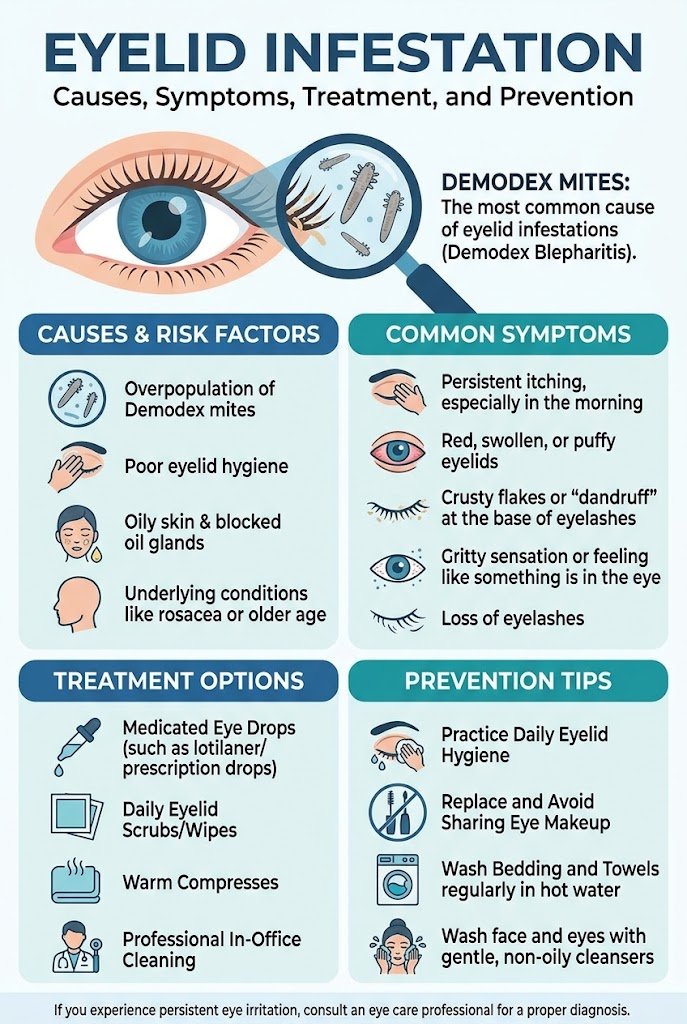
Eyelid Infestation: Causes, Symptoms, Treatment, and Prevention
Introduction
The human eye is one of the most delicate organs in the body, and any unusual swelling, redness, or lesion around the eyelid should be taken seriously. In rare cases, a person may develop an infestation involving fly larvae near or within the tissues of the eye. This condition is known as ophthalmomyiasis when the larvae affect the eye or its surrounding structures.
An image showing a larva-like organism emerging from a swollen eyelid can be alarming. However, a photograph alone cannot confirm the identity of the organism or establish a medical diagnosis. Proper examination by an eye specialist is essential to determine the cause and provide appropriate treatment.
What Is Ophthalmomyiasis?
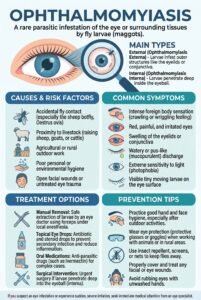
Ophthalmomyiasis is a condition caused by fly larvae affecting the eye or its surrounding tissues. Depending on the location of the infestation, it may involve the external eyelid, the conjunctiva, or, in more serious cases, deeper structures of the eye.
The severity of the condition depends on the type of fly involved, the location of the larvae, and whether inflammation or secondary infection has developed.
Although ophthalmomyiasis is uncommon, early medical assessment is important because certain forms can potentially threaten vision.
What Causes an Eyelid Infestation?
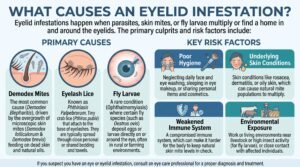
Some species of flies can deposit eggs or larvae on human tissue. Under certain circumstances, these larvae may affect the skin around the eye or other nearby structures.
Potential contributing factors include:
- Exposure to flies in affected environments.
- Open wounds or damaged skin near the eye.
- Poor wound hygiene.
- Contact with environments where certain fly species are prevalent.
It is important to understand that not every swollen eyelid or skin lesion is caused by parasites. Conditions such as styes, cysts, bacterial infections, and other inflammatory disorders can produce similar symptoms.
Common Signs and Symptoms
The symptoms of an eyelid infestation can vary depending on the location and severity of the condition.
Possible warning signs include:
- Redness and swelling: The affected eyelid may become inflamed or tender.
- Pain or irritation: Discomfort may occur around the eyelid or eye.
- A visible lesion: A small wound, lump, or opening may develop in the affected area.
- Unusual movement: In some cases, a moving larva may be visible.
- Excessive tearing: Irritation may cause the eye to water.
- Discharge or worsening inflammation: These symptoms may indicate an associated infection.
Severe eye pain, changes in vision, rapidly increasing swelling, or significant discharge require urgent medical assessment.
How Is an Eyelid Infestation Diagnosed?
An ophthalmologist or other qualified medical professional will examine the eyelid and surrounding structures to identify the cause of the symptoms.
Depending on the findings, the assessment may involve:
- A detailed examination of the eyelid and eye surface.
- Identification of any visible foreign organism or unusual tissue.
- Additional examination or testing when deeper involvement is suspected.
- Evaluation for secondary infection or damage to nearby structures.
The purpose of the examination is to establish an accurate diagnosis and determine whether specialist treatment is necessary.
Treatment Options
Treatment depends on the type of organism, the location of the infestation, and the extent of tissue involvement.
A healthcare professional may carefully remove the larvae using appropriate medical techniques and assess the affected area for injury or infection. Additional treatment may be necessary if inflammation or a secondary bacterial infection is present.
Never attempt to remove a suspected larva from the eyelid yourself. Using tweezers, needles, chemicals, or unverified home remedies near the eye can cause serious injury and may damage delicate tissues.
If a larva-like organism is visible on or within the eyelid, seek prompt medical attention from an ophthalmologist or an emergency department.
How Can Eyelid Infestations Be Prevented?
Although not every case can be prevented, several precautions may reduce exposure to flies and help protect the skin around the eyes.
- Maintain good personal and environmental hygiene.
- Keep wounds clean and appropriately covered.
- Reduce exposure to flies and other insects.
- Use suitable insect-control measures in affected environments.
- Avoid touching the eyes with unwashed hands.
- Seek medical advice for persistent eyelid swelling, unusual lesions, or unexplained irritation.
People who work outdoors or live in areas where certain fly species are common should take particular care to protect open wounds and maintain appropriate hygiene.
When Should You Seek Medical Attention?
Any suspected infestation involving the eyelid requires prompt professional evaluation because of the eye’s delicate anatomy.
Seek emergency care if you experience severe pain, blurred or reduced vision, rapidly worsening swelling, difficulty moving the eye, or other significant changes in eye function.
Even if symptoms appear mild, do not delay medical assessment when a moving organism or larva is visible near the eye.
Conclusion
An unusual lesion or larva-like organism on the eyelid may indicate a condition that requires specialized medical care. While ophthalmomyiasis is a recognized medical condition, other eyelid disorders can produce similar appearances, and a diagnosis cannot be made from an image alone.
Early assessment, appropriate treatment, and careful prevention measures can help reduce the risk of complications and protect eye health.
Medical Disclaimer: This article is intended for educational purposes only and should not replace professional medical advice, diagnosis, or treatment. Anyone with a suspected infestation involving the eye or eyelid should seek prompt evaluation by a qualified healthcare professional.