
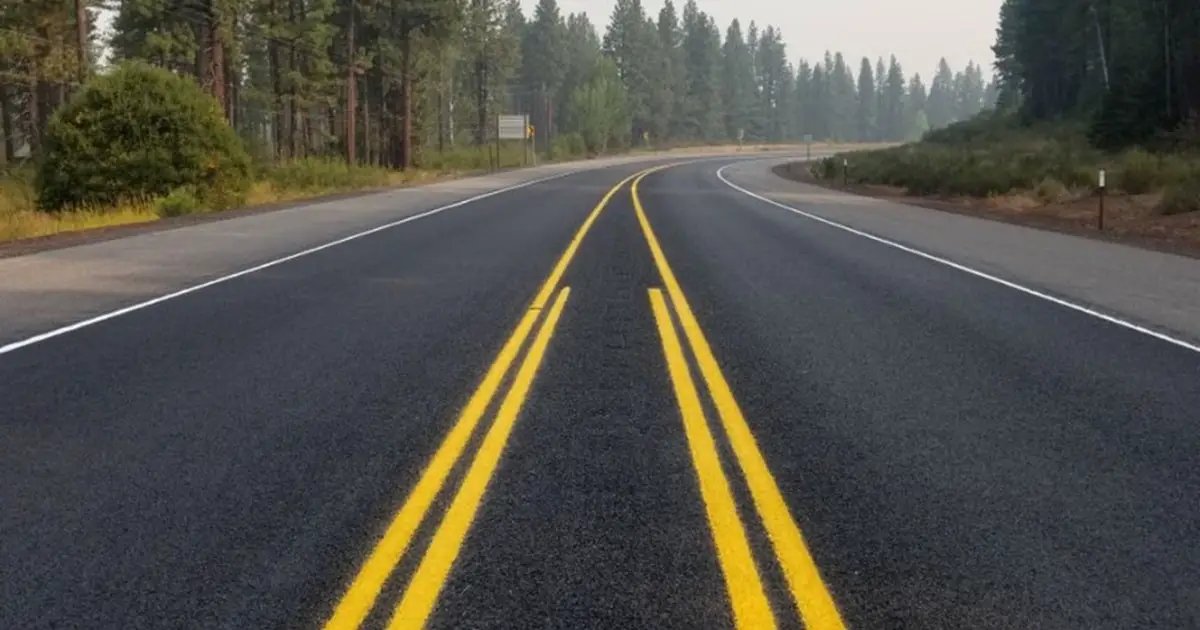
The Real Reason Why Road Lines Are Yellow
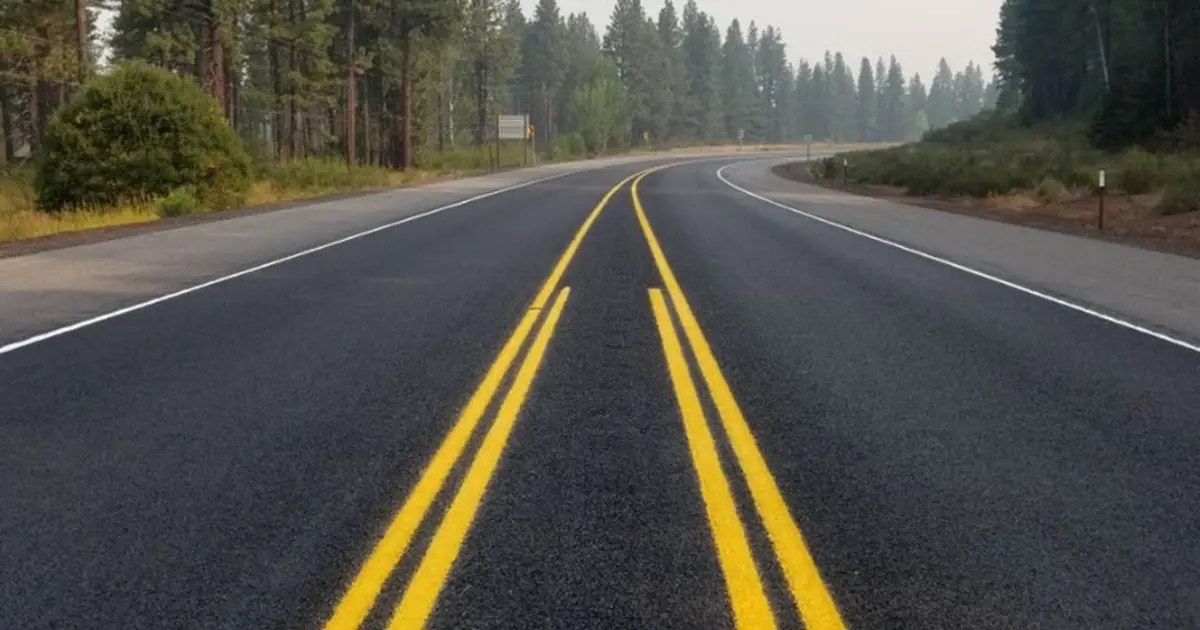
The yellow stripe down the middle of a two-way street does one specific job. It is not decoration. The color itself is a message. Before a driver has consciously read anything, that yellow tells them which side of the pavement belongs to them. It also tells them which side belongs to the cars coming the other way. Most people drive past it a thousand times without a second thought. It turns out the rule behind it is simpler, and more deliberate, than you might expect.
What a Yellow Line Actually Tells You
The whole system comes down to a single distinction. Yellow separates traffic moving in opposite directions. White separates traffic moving the same way. That is the core of it, and once you know it, you can read almost any road surface at a glance.
The center line of a two-way street is yellow. The lane on the other side carries cars heading straight toward you. The color is a boundary between you and oncoming traffic. White lines mark the edges of the road or divide lanes flowing in the same direction. For example, the dashes between two lanes of a highway.
That is why a divided highway looks different from a quiet country road. On the highway, the lanes beside you run the same way, so the markings between them are white. The yellow line only shows up where somebody could be coming the other way.
Single, Double, Solid or Broken
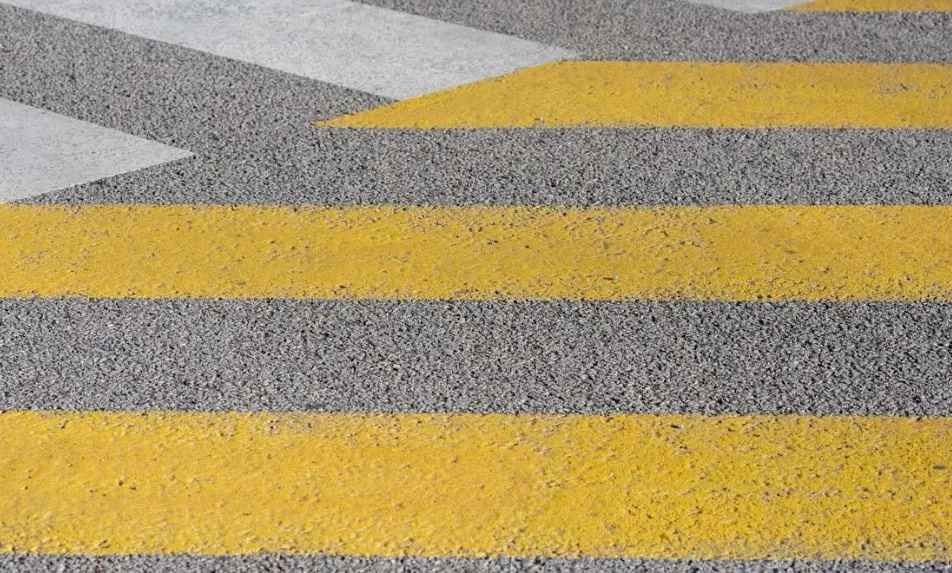
Yellow carries more than one instruction, and the shape of the line fills in the detail. A broken yellow center line allows you to pass when the road ahead is clear and safe to cross. The gaps are the permission.
A solid yellow line on your side means no passing there. You are expected to stay put behind whatever is in front of you until the markings change. On a two-lane road you sometimes see one solid line paired with one broken line. This means one direction can pass, the other cannot, depending on which side the broken line sits.
A double solid yellow line is the firmest version of the message. Keep to the right of it, and treat it as a wall. Across much of the country these markings carry different meanings for drivers, and yellow is far from the only color with a job. Highway crews switch to a different shade entirely when conditions change, which is the whole reason orange lines sometimes replace the usual ones.
Why Are Road Lines Yellow and Not Another Color
Yellow earns its place by standing out. Against gray and black asphalt, yellow holds strong contrast in daylight, at dusk, and under headlights. This matters because the line is the only thing telling you where the oncoming lane begins. A marking that vanishes into the pavement is worse than no marking at all.
There is also a logic to pairing yellow with the idea of danger. Yellow reads as caution almost universally, on signs, on warning labels, on hazard tape. Putting that color between you and traffic coming the other way lines the signal up with the risk. The color is doing cognitive work, not just marking a position.

Yellow became the standard center-line color through decades of shifting practice. So it is worth being careful with dates. What is clear is that the choice was made for readability and consistency, not habit.
How It Became a National Rule
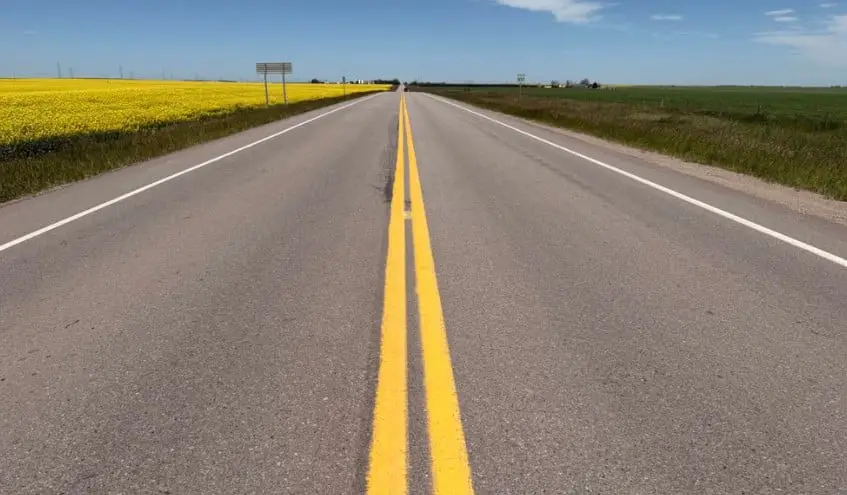
The Manual on Uniform Traffic Control Devices turned a sensible convention into a coast-to-coast rule. The Federal Highway Administration oversees it. The MUTCD sets the national standard for how pavement markings look and what their colors mean. That is why a yellow line in Maine signals the same thing as a yellow line in Arizona.
That uniformity is the point. A driver crossing state lines does not have to relearn the road, because the markings follow one rulebook. The same instinct governs other signage color choices, right down to the odd places where the rules bend, like the reason Disney World uses purple road signs.
Watch for it on your drive home. The yellow line registers before you consciously read it. The color alone tells you which half of the road is yours, and which belongs to oncoming drivers.