
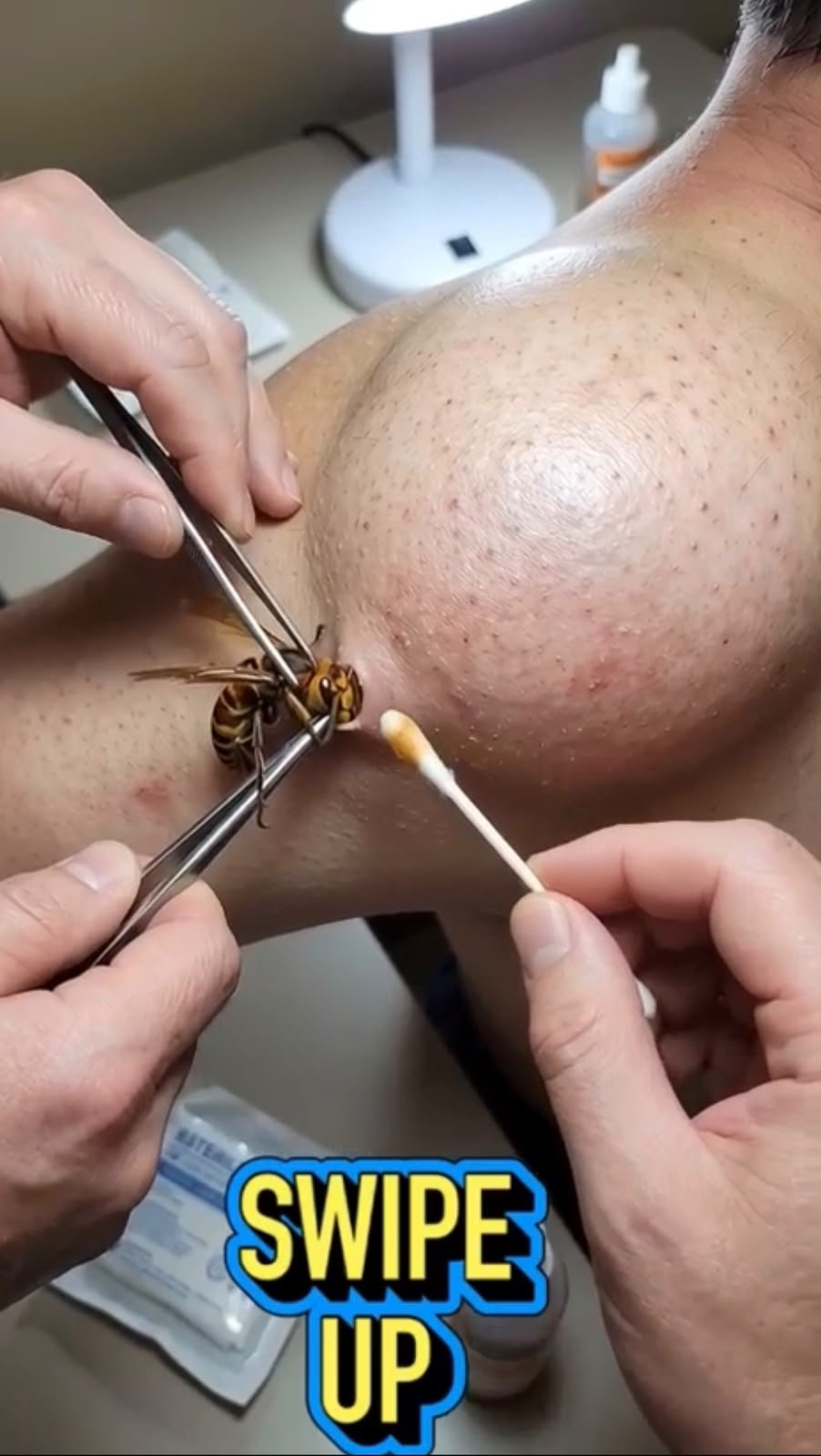
🐝 A Large Wasp Pressed Against the Skin — What Happens During a Sting?

Although the scene looks dramatic, the photograph does not establish that the insect is embedded in the skin or that a sting has occurred. Understanding how wasp stings work is important for safe treatment.
Why Does a Wasp Sting Cause Swelling?
When a wasp stings, venom enters the skin and triggers an inflammatory response. The body’s immune system reacts, which can produce several symptoms:
- Redness around the sting site.
- A raised, swollen area.
- Burning or sharp pain.
- Itching and tenderness.
- Warmth around the affected skin.
Some people develop a larger local reaction, with swelling that becomes more noticeable over the following hours.
However, widespread swelling, breathing difficulties, or dizziness may indicate a serious allergic reaction and require emergency care.
Final Thoughts
A wasp sting can cause an uncomfortable reaction, but dramatic-looking scenes do not always represent a medical emergency. The safest response is to avoid handling the insect, clean the affected area, reduce swelling with a cold compress, and watch for signs of an allergic reaction.
Never attempt to copy an extraction procedure from a viral video. Proper first aid and timely medical care are much safer than experimenting with sharp instruments or unknown substances.