
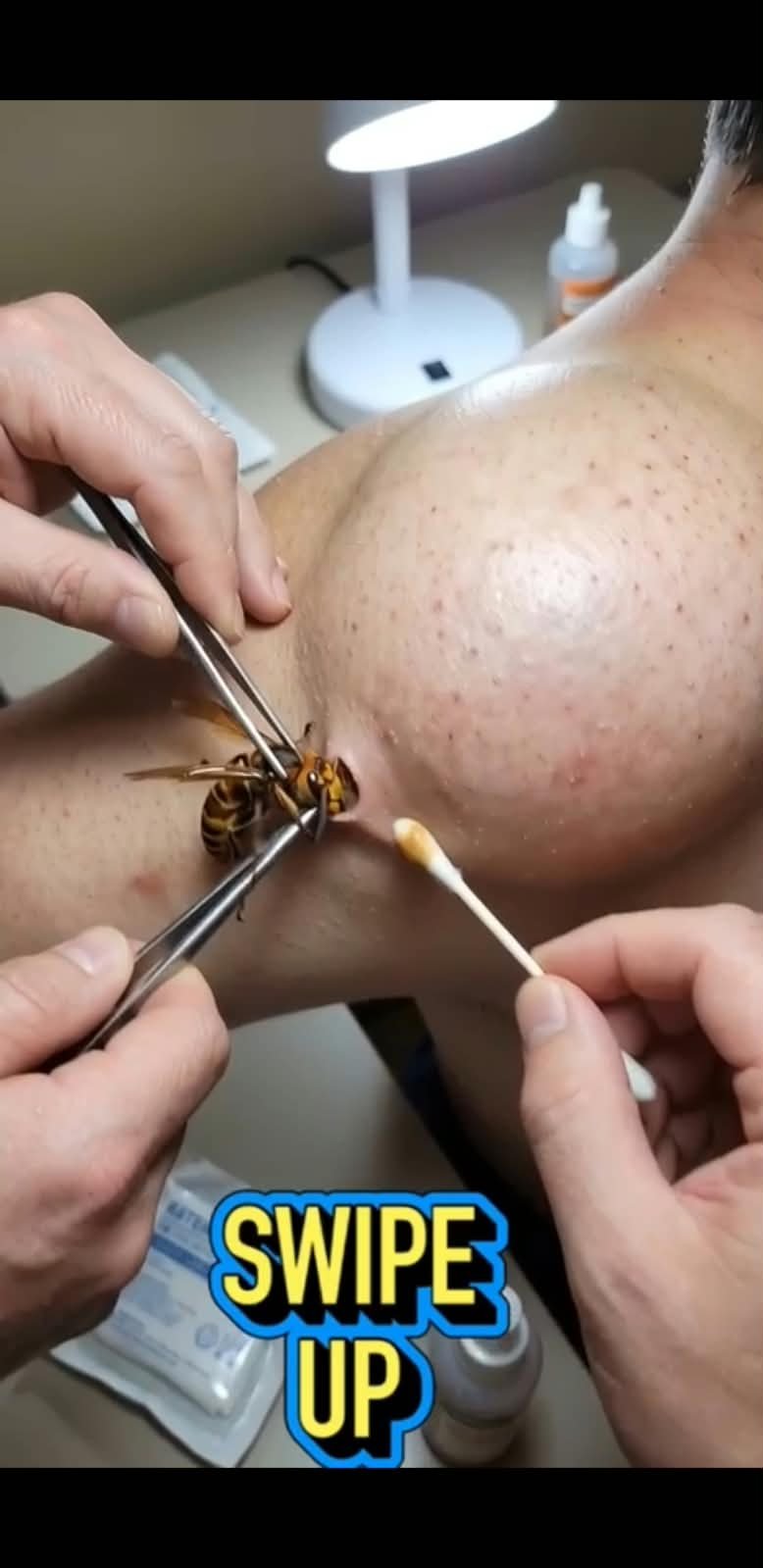
🐝 A Giant Wasp Beside the Neck — What Happens If This Insect Stings?
A dramatic close-up shows a large yellow-and-brown wasp being held with metal instruments near a person’s neck and shoulder. A cotton swab is positioned close to the insect, creating the appearance of an unusual medical procedure.
But why would someone examine a wasp so closely? Could the insect have stung the person, or is someone attempting to remove it?
Although the scene looks alarming, the photograph does not confirm that a sting has occurred or that the insect is embedded in the skin. Understanding wasp behavior and proper first aid is much more important than attempting a risky extraction.
Can a Wasp Become Trapped Beneath Human Skin?
Wasps do not normally burrow beneath human skin or live inside the body.
They use a specialized stinger to inject venom when they feel threatened. Unlike honeybees, wasps generally do not leave their stingers behind and can sting multiple times.
A wasp sting may cause:
- Sudden, sharp pain.
- Redness around the affected area.
- Local swelling and tenderness.
- Burning or itching.
- A raised bump around the sting site.
Most reactions remain limited to the affected area and improve within a few days.
When Does a Wasp Sting Become an Emergency?
Most wasp stings cause temporary discomfort, but a severe allergic reaction requires immediate medical attention.
Watch for these warning signs:
- Difficulty breathing or wheezing.
- Swelling of the lips, tongue, or throat.
- Difficulty swallowing.
- Sudden dizziness or fainting.
- Widespread hives or severe itching.
- Vomiting or severe abdominal symptoms.
If these symptoms appear, seek emergency medical assistance immediately. If the person has a prescribed epinephrine auto-injector, it should be used according to their emergency action plan.