
😱 Severe Chin Acne With Multiple Deep Pores — What Is Happening Beneath the Skin?
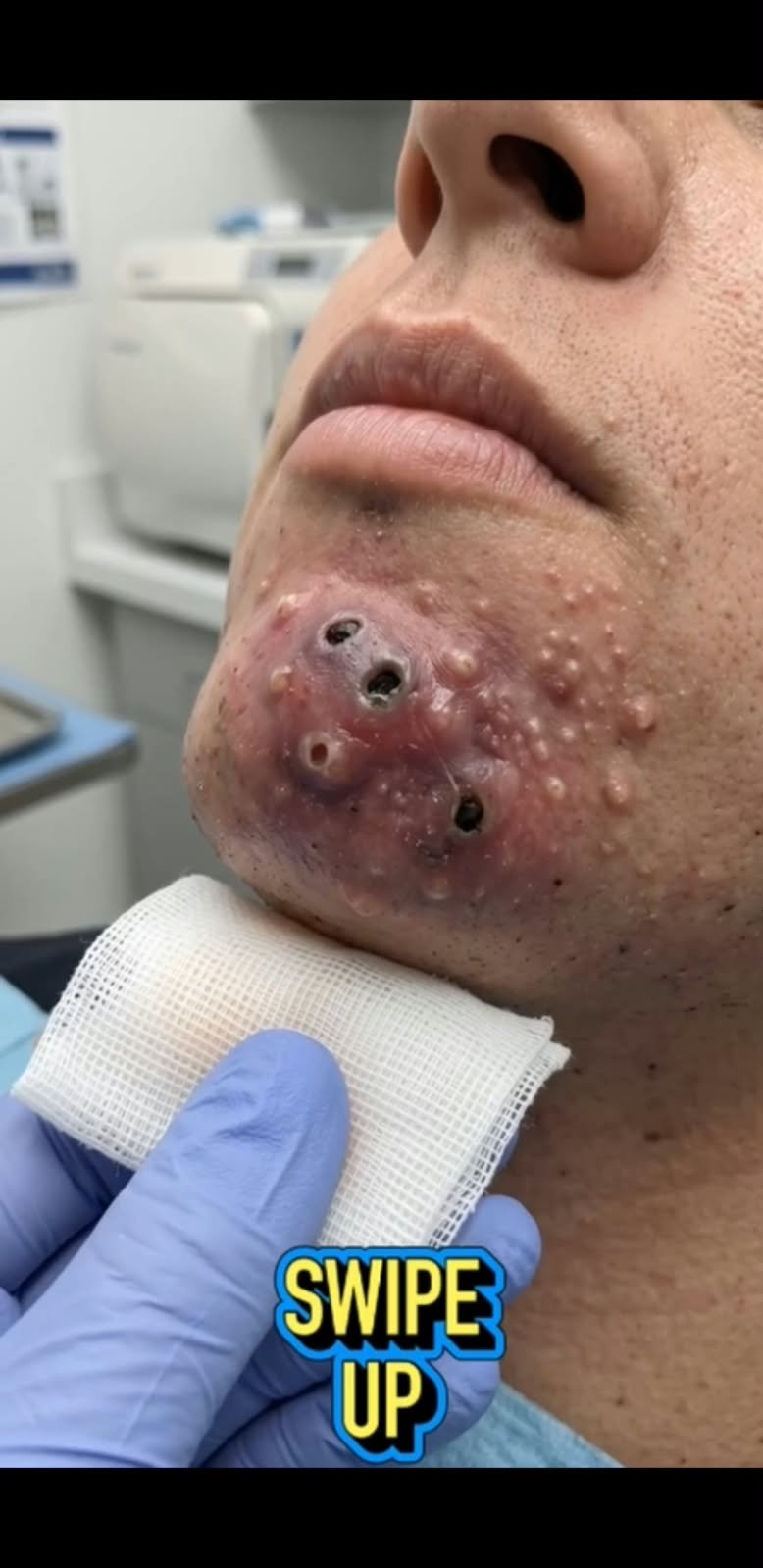
A close-up medical image shows an unusually swollen chin covered with numerous raised bumps, inflamed spots, and several dark-centered openings. The surrounding skin appears red and irritated, suggesting a significant inflammatory skin condition.
Unlike ordinary pimples, some of these bumps appear deeper and larger, making the condition particularly concerning.
Could this be severe cystic acne, nodular acne, or another inflammatory skin disorder?
Let’s explore the possible causes, professional treatment options, and important steps that can help protect the skin.
How Do Dermatologists Treat Severe Nodular or Cystic Acne?
Severe acne usually requires more than ordinary facial cleansers or basic spot treatments.
A dermatologist may recommend a treatment plan based on the severity of the condition.
1. Prescription Acne Medication
Prescription creams or gels may help reduce blocked pores and inflammation. Treatment can include ingredients such as retinoids or benzoyl peroxide.
2. Oral Medication
For more severe cases, doctors may prescribe oral medication to control inflammation and acne-causing bacteria.
3. Isotretinoin Treatment
For certain patients with severe nodular or cystic acne, isotretinoin may be considered under specialist supervision. It requires careful medical monitoring.
4. Corticosteroid Injections
A dermatologist may inject medication directly into an especially painful acne nodule to reduce swelling and discomfort.
5. Professional Drainage When Necessary
Some large, painful acne cysts may require a medical procedure. Attempting to drain them at home can increase the risk of infection and scarring.
Final Thoughts
The unusual appearance of this chin condition highlights how different severe acne can look from ordinary pimples.
Multiple deep bumps, inflamed openings, and surrounding redness may be associated with nodulocystic acne or another significant inflammatory skin condition.
The correct diagnosis matters because severe acne often requires prescription treatment rather than repeated squeezing or surface-level extraction.
With professional assessment, appropriate medication, and consistent skin care, many people can achieve meaningful improvement and reduce the risk of permanent scarring.
Medical Disclaimer: This article is for educational purposes only. The photograph cannot confirm a diagnosis. A qualified dermatologist should examine the skin and recommend appropriate treatment.