
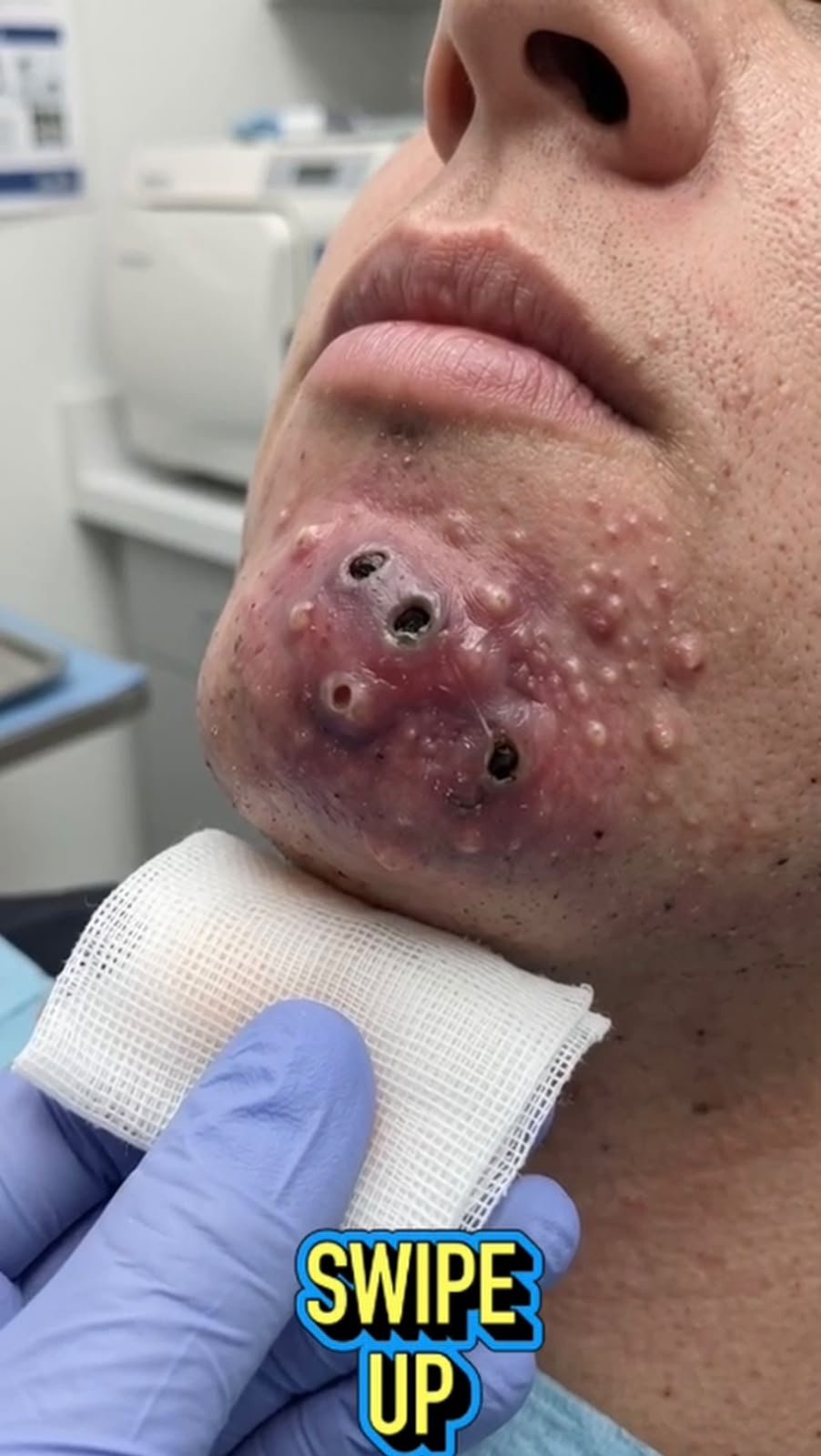
😲 Severe Chin Acne With Deep, Inflamed Bumps — What Could Be Happening Beneath the Skin?
The image shows a visibly inflamed chin with multiple raised bumps and several dark or open-looking pores. Although the exact condition cannot be confirmed from a photograph, this appearance may be consistent with severe inflammatory acne, including nodular or cystic acne.
Understanding what causes these breakouts — and how to treat them safely — is important for protecting the skin and reducing the risk of permanent scarring.
5 Important Safety Tips for Healthier Skin
- Never squeeze deep pimples: Picking or pressing painful bumps can push inflammation deeper and increase scarring.
- Cleanse gently: Wash the face with a mild cleanser instead of harsh scrubs.
- Avoid unverified treatments: Do not apply strong chemicals, household remedies, or unknown products to inflamed skin.
- Protect your skin: Use a suitable non-comedogenic moisturizer and broad-spectrum SPF 30 or higher sunscreen.
- Consult a dermatologist early: Multiple painful, deep, or recurring bumps deserve professional attention.
These precautions are especially important when acne is severe or the skin is already swollen. American Academy of Dermatology — Pimple Popping and Skin Safety
When Should You Seek Medical Help?
Arrange a dermatologist appointment promptly if the bumps are deep, painful, spreading, or leaving scars. Seek urgent medical care if redness or swelling spreads quickly, the area becomes extremely painful, or fever and other signs of illness develop.
Do not attempt to remove dark material or drain open-looking spots with tweezers or needles.
Final Thoughts
Severe chin acne can look alarming, but effective treatments are available. The most important step is identifying the actual skin condition and following a treatment plan suited to the individual.
With early medical care, appropriate medication, and gentle daily skin habits, many people can improve their skin and reduce the risk of permanent scarring.
Medical Disclaimer: This article is for educational purposes only. A photograph cannot establish a medical diagnosis. Always consult a qualified healthcare professional for an accurate assessment and personalized treatment.