

The Clever Reason Aldi Stretches Barcodes Across a Whole Cereal Box

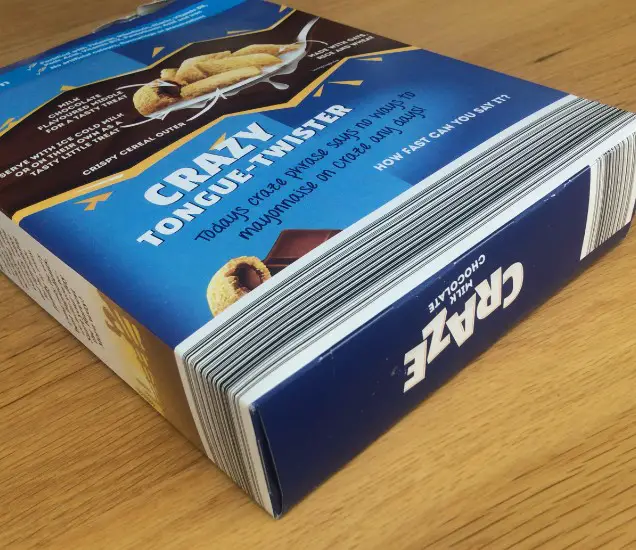
Aldi barcodes run so long that one code can span almost the full length of a cereal box. The same code often appears again on two or three other sides. Once you notice it, you cannot stop noticing it. Stand at the register and the reason starts to make sense. The cashier grabs each item, barely slows down, and the beep comes before the box has even settled on the counter. Nothing gets turned, flipped or scanned twice. It looks less like a checkout and more like a conveyor belt. A person just happens to stand at the end of it.
That speed is not an accident, and neither are the enormous codes making it possible.
What People Actually Notice About Aldi Barcodes
Pick up almost any Aldi private-label product and look closely. The UPC code is bigger than the one on a comparable name brand, sometimes dramatically so. It stretches wide. The printed bars look taller and longer than expected for something a machine reads in a fraction of a second.
Then flip the package over. There is a good chance you will find the same barcode again. And on the next side. Some boxes carry several copies of the identical code, wrapped across different faces of the packaging. Cans, bags and cartons get the same treatment in their own way.
This is deliberate. Aldi controls the design of its own private-label packaging, which fills most of its shelves. The oversized, repeated codes are a deliberate choice. A printing mistake would not show up identically across millions of boxes and dozens of product lines. The scale of the pattern is the giveaway that someone planned it.
The One Reason Aldi Barcodes Are So Long
The short answer is speed. A bigger barcode on more surfaces lets the scanner catch it from almost any angle. A cashier almost never has to stop, rotate the item, and try again. Whichever way the box lands in a hand, a code is usually facing the scanner already.
Think about what slows a normal checkout down. It is rarely the beep itself. It is the hunting, the little quarter-turn of a package. Someone searches for the one small code hiding on a bottom corner. Multiply that pause by a cart full of groceries, then by every shopper in line, and the lost seconds pile into minutes. Oversized multi-surface codes aim straight at that bottleneck. There is no searching, because the code is large and it is everywhere.
That design is widely reported to feed Aldi’s famously fast lanes, and it lines up neatly with what the packaging plainly does. It is worth being precise here, though. Consumer outlets consistently give the faster-scanning motive, and it matches the observable design. However, no located, on-the-record statement from Aldi backs this in the reporting at hand. So treat it as the explanation that fits, backed by how the codes actually behave, rather than a quoted corporate promise. The physics is simple enough to trust: more code, more angles, fewer second passes.
How It Fits Aldi’s Whole No-Frills Playbook
The barcodes make more sense once you see them as one piece of a much larger system. Aldi has built its entire model around stripping out cost and time wherever it can. Shelves are stocked with private-label goods instead of a sprawling range of brands. Products often sit in their shipping boxes, cut open and placed straight on the shelf, so nobody spends hours stacking individual items.
You rent a cart with a quarter and get it back when you return the cart. This keeps carts organized without paying someone to round them up. Staffing stays lean. Stores are compact. Every choice saves money and time, and the savings turn into lower prices.
The giant barcodes belong to that same logic. A cashier who never fumbles for a code rings through more customers per hour. This means fewer registers and shorter lines. It is the kind of quiet, unglamorous efficiency the company has turned into a signature, much like its deliberately bare, music-free stores. The barcode is just the version of that thinking you can hold in your hand.
What This Means When You’re at the Register
For you, it mostly explains a feeling. If an Aldi checkout seems faster than it has any right to be, the barcodes are part of why. The same design helps at self-checkout too. Even an untrained shopper finds and scans a code on the first try, since almost no way exists to hold the box wrong.
The next visit, pick up a box and count how many times the same code repeats around it. It is a strange thing to find once you are looking, a design built for nobody’s eyes but a scanner’s. The whole point of those oversized codes is to be invisible in the moment and felt in the total, a few seconds saved on every item, quietly adding up to the short lines Aldi is known for. Nothing clever to admire while you shop, which is exactly how it was meant to work.