
😲 Something Is Firmly Attached to the Scalp — Could It Be a Tick?
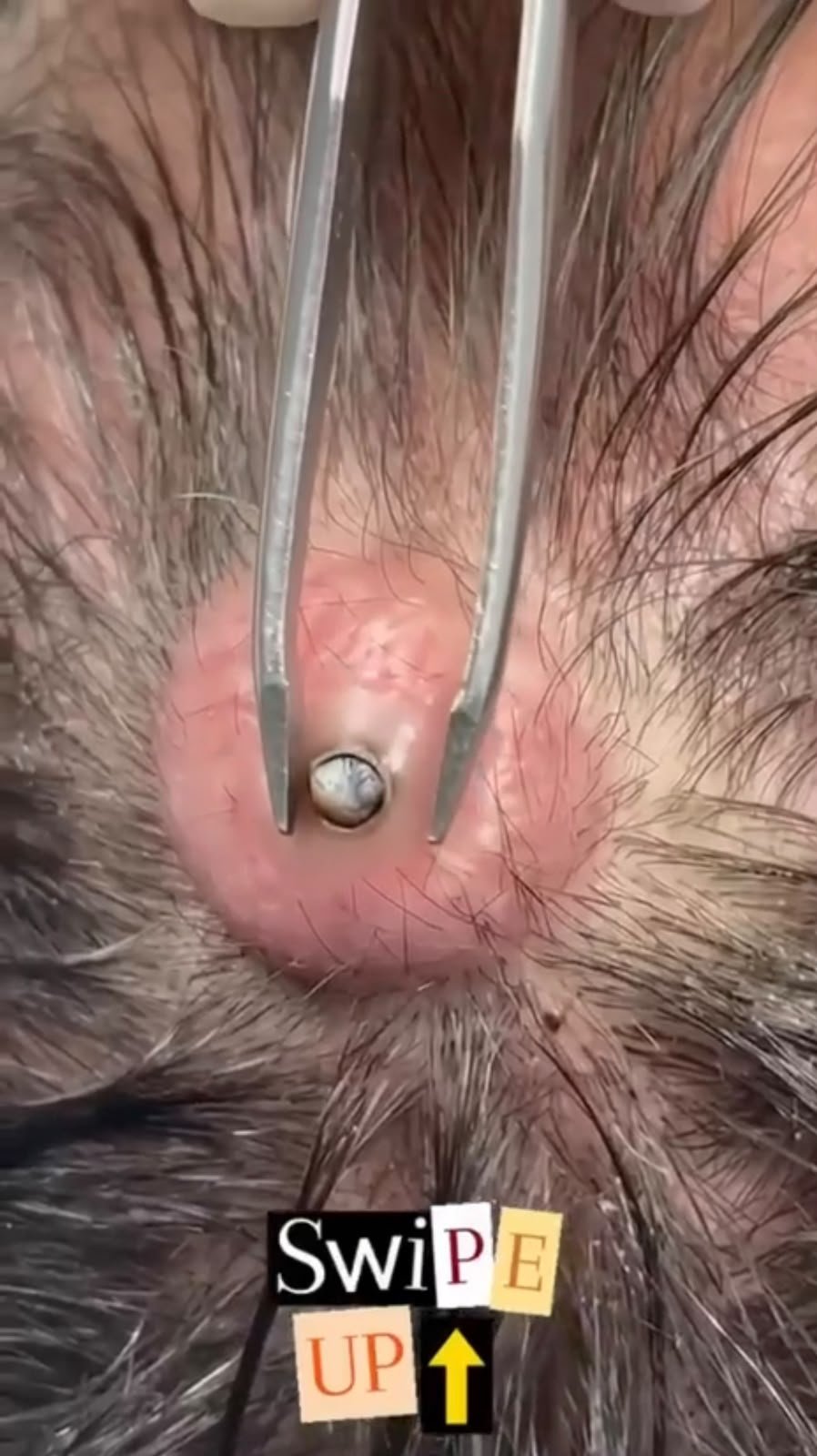
A close-up view of an irritated area of the scalp shows a small, round object attached to the skin while tweezers are positioned nearby. Its appearance raises an important question: could this be a tick, or might it be another type of skin or insect-related issue?
Although the object looks tick-like, a photograph alone cannot confirm exactly what it is. Proper identification and safe removal are important because some ticks can transmit infections.
What Could Be Attached to the Scalp?
One possibility is an attached tick. Ticks are small parasites that attach to the skin to feed on blood. They can sometimes be difficult to notice, especially when hidden among hair.
The redness and swelling around the object may be a local reaction to a bite or irritation. However, other skin conditions or foreign material can sometimes look similar, so an in-person examination may be needed.
According to the CDC, attached ticks should be removed promptly.
Why Is Safe Removal Important?
If the object is a tick, pulling it incorrectly may leave its mouthparts in the skin. Squeezing or crushing its body should also be avoided.
The CDC recommends using clean, fine-tipped tweezers to grasp an attached tick as close to the skin as possible, then pulling upward with steady, even pressure. Avoid twisting or jerking it.
If the object cannot be identified or safely grasped, getting help from a healthcare professional is a sensible choice.
When Should You Seek Medical Attention?
Pay attention to symptoms after a suspected tick bite. Medical advice is especially important if you notice:
- Increasing redness, warmth, swelling, or pain.
- Pus or other unusual discharge.
- A spreading rash around or away from the bite.
- Fever, headache, unusual tiredness, or muscle aches.
- Symptoms that develop in the days or weeks after removal.
A doctor can examine the area, assess the risk of infection, and decide whether further treatment is necessary.