
Why Some Wall Outlets Are Installed Upside Down See Here
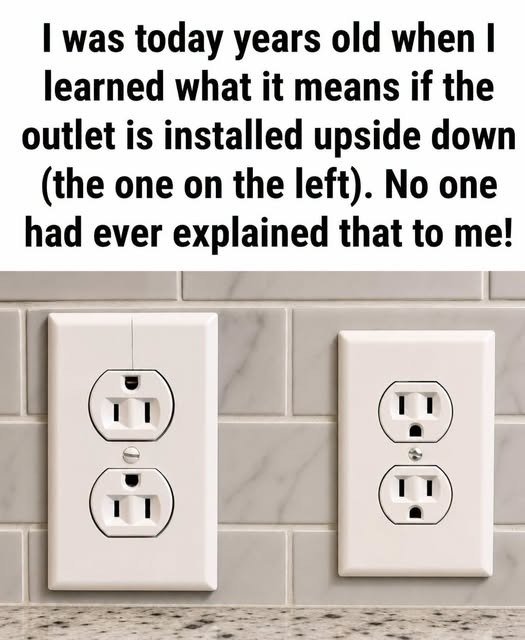
That “upside-down” electrical outlet in your living room or bedroom isn’t a mistake made by a careless electrician. In many homes, an inverted receptacle—where the round ground hole sits at the top—serves as an intentional visual cue that the socket is controlled by a wall switch.
The Primary Reason: Switched Outlets
-
Lighting Control: In rooms constructed without built-in ceiling light fixtures, builders wire a wall switch directly to an outlet. Turning the receptacle upside-down helps homeowners instantly identify where to plug in floor or table lamps so the main room switch works as intended.
-
Half-Hot (Split) Outlets: Frequently, only one half of the flipped receptacle is wired to the wall switch. The other half remains continuously powered, allowing you to plug in phone chargers, alarm clocks, or routers without losing power when you switch off the lights.
Other Reasons Outlets Are Flipped
-
Enhanced Electrical Safety: Some electricians install all outlets ground-side up as a safety precaution. If a plug pulls slightly out of the wall and a thin metal object (such as a paperclip, coin, or blind slat) falls between the wall and the plug, it will safely strike the grounded pin first—preventing dangerous sparks or short circuits.
-
Commercial Standards: Many commercial buildings and hospitals require ground-up installation by default due to strict safety codes.
-
Installer Preference: Because the National Electrical Code (NEC) permits both orientations, a flipped outlet may simply reflect the installer’s personal habit or a past DIY project.
How to Test Your Outlets
Because orientation alone isn’t a national requirement, testing is the only way to confirm how an outlet functions:
-
Plug in a Working Device: Connect a lamp or nightlight to the top socket.
-
Toggle Nearby Wall Switches: Flip the switches in the room one by one to check if the light responds.
-
Repeat for the Bottom Socket: Check the second socket independently to see if the outlet is a “half-hot” split receptacle.
Identifying your switched outlets prevents you from assuming a perfectly functional socket is “dead” simply because the wall switch turned off the power.