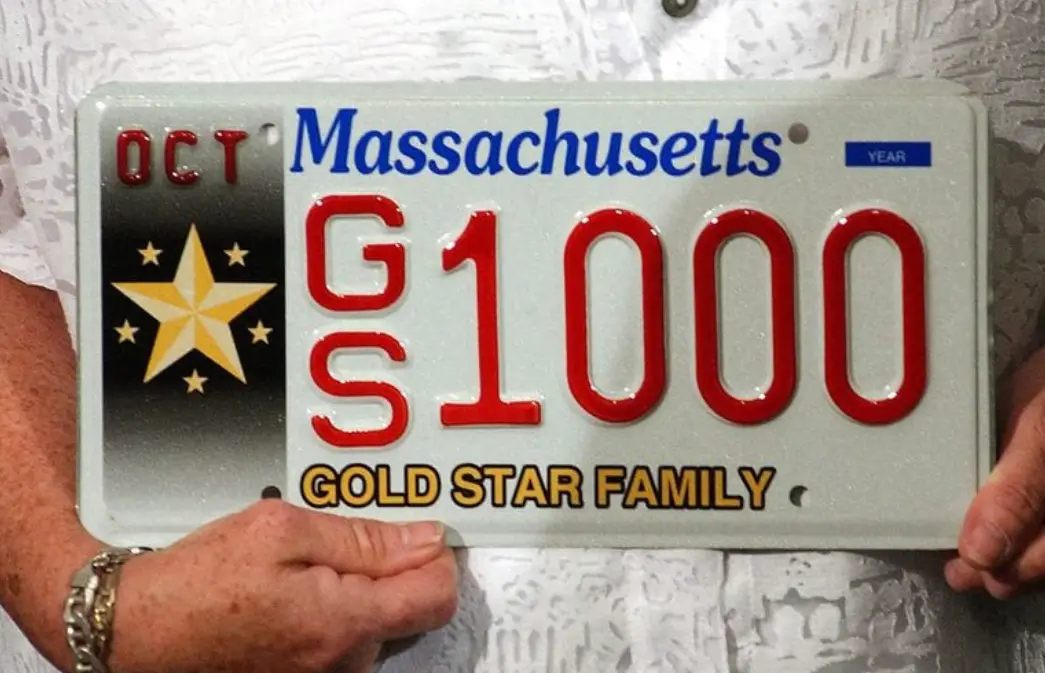
The Meaning Behind License Plates with a Gold Star Read Here

A Gold Star displayed on a license plate is a profound symbol of sacrifice, indicating that the driver lost a family member in the line of military duty. This solemn tradition originated over a century ago as a way to honor active military personnel and remember those who gave their lives for their country.
The Evolution of the Blue and Gold Stars
-
1917 (The Blue Star Banner): During World War I, Army Captain Robert L. Queisser of the Ohio 5th Infantry created the “Blue Star Service Banner” to honor his two sons serving on the front lines. The banner featured a white rectangle with a red border and a blue star for each family member in active service. By September 1917, Ohio formally recognized the banner in its Congressional Record as a symbol of military support.
-
1918 (The Shift to Gold): To honor fallen service members, the Women’s Committee of the Council of National Defense proposed that mothers wear black armbands featuring a gold star for each deceased loved one. President Woodrow Wilson approved the initiative on May 28, leading families to place gold stars over the blue stars on their home service banners.
-
1928 (American Gold Star Mothers, Inc.): Twenty-five mothers traveled to Washington, D.C., to officially establish American Gold Star Mothers, Inc., cementing a national support system and preserving the legacy of their children’s sacrifice.
-
1936 (Gold Star Mother’s Day): Congress officially designated the last Sunday of September as “Gold Star Mother’s Day” to ensure the nation continuously remembers the sacrifice of mothers who lost children in service.
Applying for a Gold Star License Plate
The process and eligibility criteria for requesting a Gold Star designation on a license plate vary depending on the state:
-
Broader Eligibility: Some states permit parents, spouses, siblings, children, and grandchildren of the fallen service member to apply.
-
Restricted Eligibility: Other states limit the designation strictly to immediate family, such as spouses, parents, children, and siblings.
To apply, family members must verify the specific documentation requirements and eligibility standards established by their state’s department of motor vehicles.