
The Large Back Lump That Needed Medical Attention: Understanding Inflamed Skin Cysts
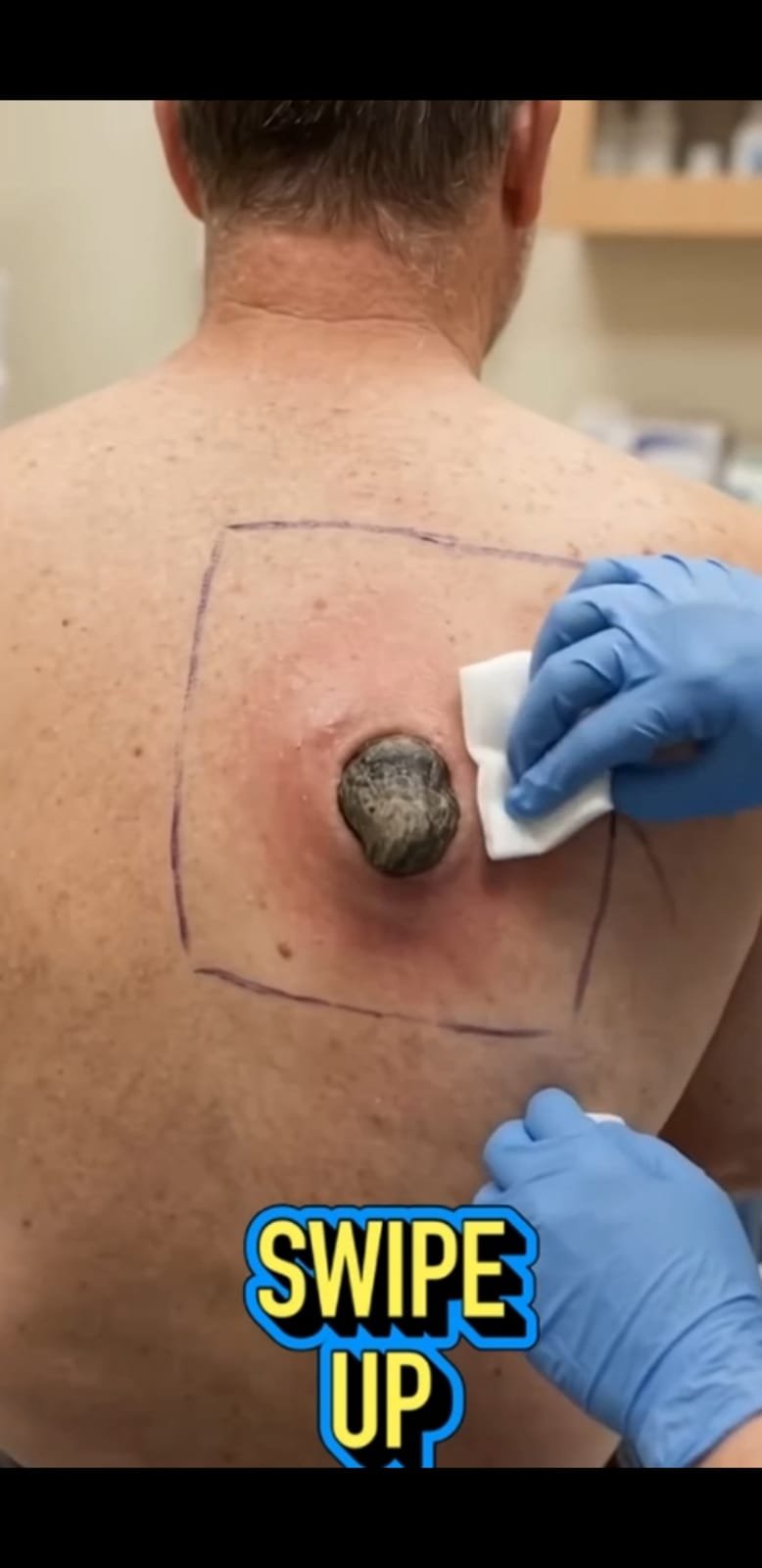
A large, dark, rounded growth on the back can look alarming, especially when the surrounding skin appears swollen and irritated. The image shows a prominent raised lesion on the upper back surrounded by an area of redness, with a medical professional preparing the skin for treatment.
While the exact diagnosis cannot be confirmed from a photograph alone, lesions like this can sometimes be associated with epidermoid cysts, inflamed cysts, or other types of skin growths. Epidermoid cysts commonly occur on the trunk and can become painful, swollen, or inflamed.
What Could a Large Lump Like This Be?
An epidermoid cyst develops beneath the skin and may slowly grow over time. Some have a small central opening, while others become quite large.
Most epidermoid cysts are harmless, but they can become inflamed, rupture, or become infected, leading to redness, tenderness, and swelling.
However, several different skin conditions can look similar. A healthcare professional needs to examine the lesion before a diagnosis can be made.
Why Does the Area Around It Look Red?
Inflammation can cause the skin around a cyst to become red, swollen, and tender. Importantly, redness does not always mean that an epidermoid cyst is infected. The American Academy of Dermatology notes that many red and swollen epidermoid cysts are inflamed rather than infected.
This distinction matters because treatment depends on the underlying problem.
Why Professional Treatment Is Important
When a cyst is large, painful, repeatedly irritated, or inflamed, a dermatologist or other qualified healthcare professional can determine the appropriate treatment.
Possible medical treatments include:
- Incision and drainage to release the contents of a symptomatic cyst
- Medication or injection to reduce inflammation in selected cases
- Complete surgical removal of the cyst when appropriate, which can reduce the chance of it returning
If a cyst is significantly inflamed, definitive removal may sometimes be delayed until the inflammation settles.
Never Try to Remove a Large Cyst Yourself
It may be tempting to squeeze, puncture, or cut a large lump at home, but this can increase the risk of infection, bleeding, tissue injury, and scarring.
Mayo Clinic specifically recommends resisting the urge to squeeze or pop an epidermoid cyst yourself.
A medical professional can use sterile equipment and determine whether drainage, observation, medication, or surgical removal is appropriate.