
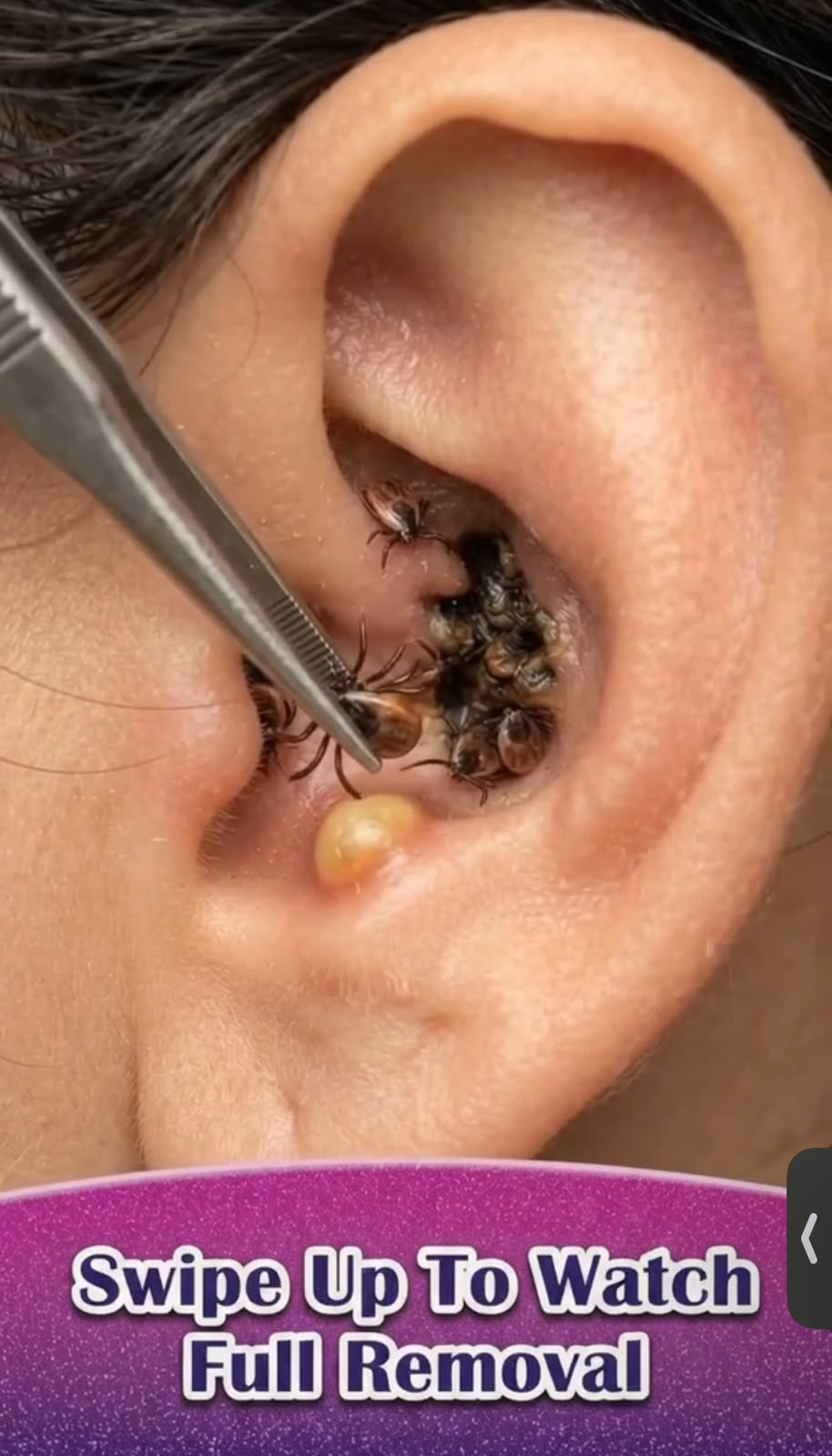
Multiple Ticks Around the Ear: Why Prompt Removal Matters
A close-up image like this can be startling. It appears to show multiple tick-like parasites attached around the outer ear, with a medical professional using forceps to remove them. The exact species and diagnosis cannot be confirmed from a photograph alone, but the situation highlights an important health issue: attached ticks should be removed promptly and carefully.
Ticks can attach to many parts of the body, including around and behind the ears.
Why Ticks Around the Ear Can Be Easy to Miss
Ticks are small and can blend into hair and skin. The area around the ear can be particularly difficult to inspect, especially when someone has thick hair.
After spending time outdoors, it is worth checking areas such as:
- Around and behind the ears
- The scalp and hairline
- Under the arms
- Around the waist
- Behind the knees
- Other areas where clothing fits closely against the skin
The CDC recommends checking the body for ticks after possible exposure and removing attached ticks as soon as possible.
What Happens After a Tick Attaches?
An attached tick can remain on the skin while feeding. Some ticks can transmit disease-causing organisms, so prompt removal is important. The risk depends on the tick species, location, and how long it has been attached.
Symptoms of tick-borne illnesses can vary, but may include fever, chills, headache, fatigue, muscle or joint aches, and certain types of rash.