
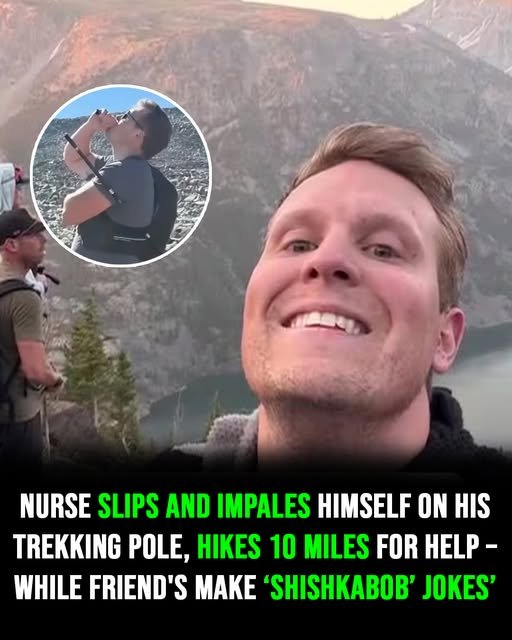
ER Nurse Hikes Miles for Help After a Fall Left a Trekking Pole Piercing His Back
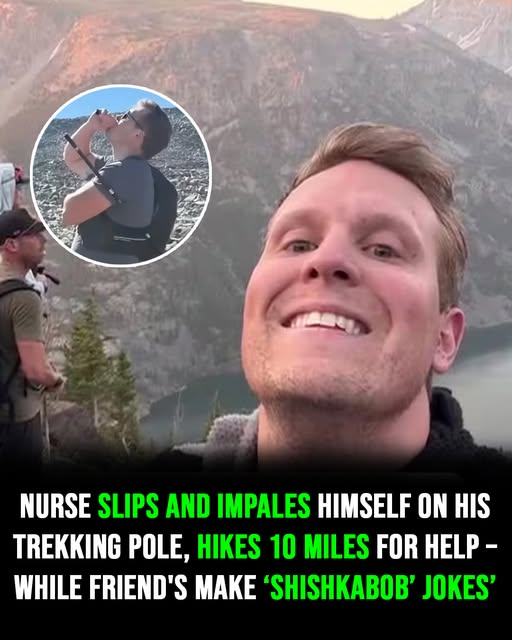
ER Nurse Hikes Miles for Help After a Fall Left a Trekking Pole Piercing His Back
A day of hiking on Montana’s tallest peak turned into an extraordinary survival story for a 32-year-old emergency room nurse from Billings. After a fall left one of his trekking poles driven through his torso, David Cifaldi made a life-or-death decision: rather than wait for rescue, he would get himself off the mountain under his own power — a grueling journey that took more than six hours.
A Freak Accident High on the Mountain
Cifaldi was climbing Granite Peak with two friends on July 20 when he slipped on a small loose rock about ten miles into the hike. In an instant, one of his trekking poles pierced his side, leaving him stranded high on the mountain with a serious injury and a long way from safety.
Granite Peak is Montana’s highest point, a remote summit that demands serious preparation from even the most experienced hikers. The route involves steep, exposed terrain, and a single misstep can have serious consequences. For Cifaldi, that misstep came without warning, transforming what should have been a memorable day in the mountains into a fight for survival.
“It was just kind of a freak thing,” the Billings man later told a local news outlet, describing how the pole had gone through the middle of his back.
Instead of panicking, Cifaldi said his years working in an emergency room immediately took over. His medical training gave him a way to process what had just happened to his own body.
“I think my nurse brain clicked on,” he told the outlet. “As soon as I was able to self-assess and establish that this was not life-threatening right now, I was pretty convinced I was going to get off that mountain under my own power.”
Making a Diagnosis From a Photograph
Before turning around to begin the long hike back to the trailhead, Cifaldi took deep breaths as he tried to determine whether the pole had punctured his chest or a lung. He told a hiking magazine that he was fairly confident the injury was to soft tissue only.
To help him assess the damage, his friends photographed the pole protruding from his body and shared the images with him, allowing the nurse to make his own diagnosis. According to his friend Jesse Ross, who was on the hike, the pole had passed all the way through his lat muscle, sticking out both ends, with roughly eight inches between the two holes.
“He self-assessed calmly: no bleeding, full feeling, no lightheadedness, nothing vital hit, and the pole stable in place,” Ross explained.
Trusting his instincts and training, and determining that the injury had not damaged any vital organ, Cifaldi decided to cross the snowfields, boulder fields, and rugged terrain that separated the group from safety, with search and rescue standing by.
The Long Walk Out
“Given his condition, he made the call to self-rescue rather than wait for extraction – hiking 10 miles back to the trailhead with a trekking pole still through his body,” Ross continued on a fundraising page organized to support Cifaldi’s medical needs as he recovers. The fundraiser had raised close to five thousand dollars of its eight-thousand-dollar goal by late July.
Looking back, Cifaldi recalled exactly how he felt in that moment. “At that point, I was up moving around, walking a little bit, and I was pretty confident that I could keep moving,” he told the magazine.
The decision to walk rather than wait was not made lightly. Helicopter rescue in such remote terrain carries significant risk and expense, and Cifaldi’s professional judgment told him his body could handle the journey if he moved carefully and steadily. Every step over the uneven ground was a calculated risk, but he trusted the calm assessment he had made in the first moments after the fall.
To support the pole while walking, Cifaldi used the chest strap from his running vest as a makeshift sling, while one friend stayed close behind to watch for any signs of serious bleeding. The arrangement allowed him to keep his hands free and his weight balanced, reducing the strain on the injured area with every mile they covered together.
As the hours passed and the group realized they were likely going to make it out safely, they even found a way to lighten the mood.
“We started making kebab jokes,” Cifaldi recalled.
High Spirits, Even at the Hardest Moments
Ross later praised his friend for staying in remarkably high spirits throughout the ordeal. He wrote that Cifaldi navigated the plateau’s snowfields and boulder fields, made his way down past Mystic Lake, and reached the trailhead entirely under his own power, never once complaining. Near Mystic Lake, Ross noted, Cifaldi even asked one of the others to hike ahead and warn fellow hikers along the trail, so no children would have to see the wound.
More than six hours after the accident, the group finally reached the trailhead. Cifaldi was taken to a local hospital before being transferred to Intermountain Health in Billings, where doctors safely removed the trekking pole. According to Ross, he continued receiving treatment and could still need surgery.
Grateful and Ready to Return
Looking back, Cifaldi knows how close the accident came to ending very differently. “A couple inches the other way, and this would be a different story,” he told the news outlet, adding that he feels very lucky.
The weeks that followed brought a long road of treatment and recovery. After the pole was removed in a hospital procedure, he continued to receive ongoing care, with doctors monitoring his progress and evaluating whether additional surgery would be needed. The support of friends, family, and the wider hiking community through the fundraising effort helped ease the burden of medical expenses while he focused on healing.
Despite everything he went through, the ordeal has not scared him away from Granite Peak. Instead, Cifaldi says he plans to return next year and finish the climb he never got to complete.
His story stands as a remarkable example of calm under pressure, of medical knowledge applied in the most extreme circumstances, and of friendship that carried a man through one of the longest days of his life. The decision to keep moving, to stay positive, and to protect others on the trail even while injured speaks to the character of both Cifaldi and the friends who walked beside him every step of the way.
For the many people who followed his story, his recovery has become a source of inspiration. It is a reminder that even in the most frightening moments, clear thinking and steady companionship can make the difference between despair and survival. And for Cifaldi himself, the mountain that nearly took everything has become a goal worth finishing — a summit he intends to stand on yet.