
Unusual Wound Infestation: Why an Open Skin Lesion Needs Urgent Medical Care
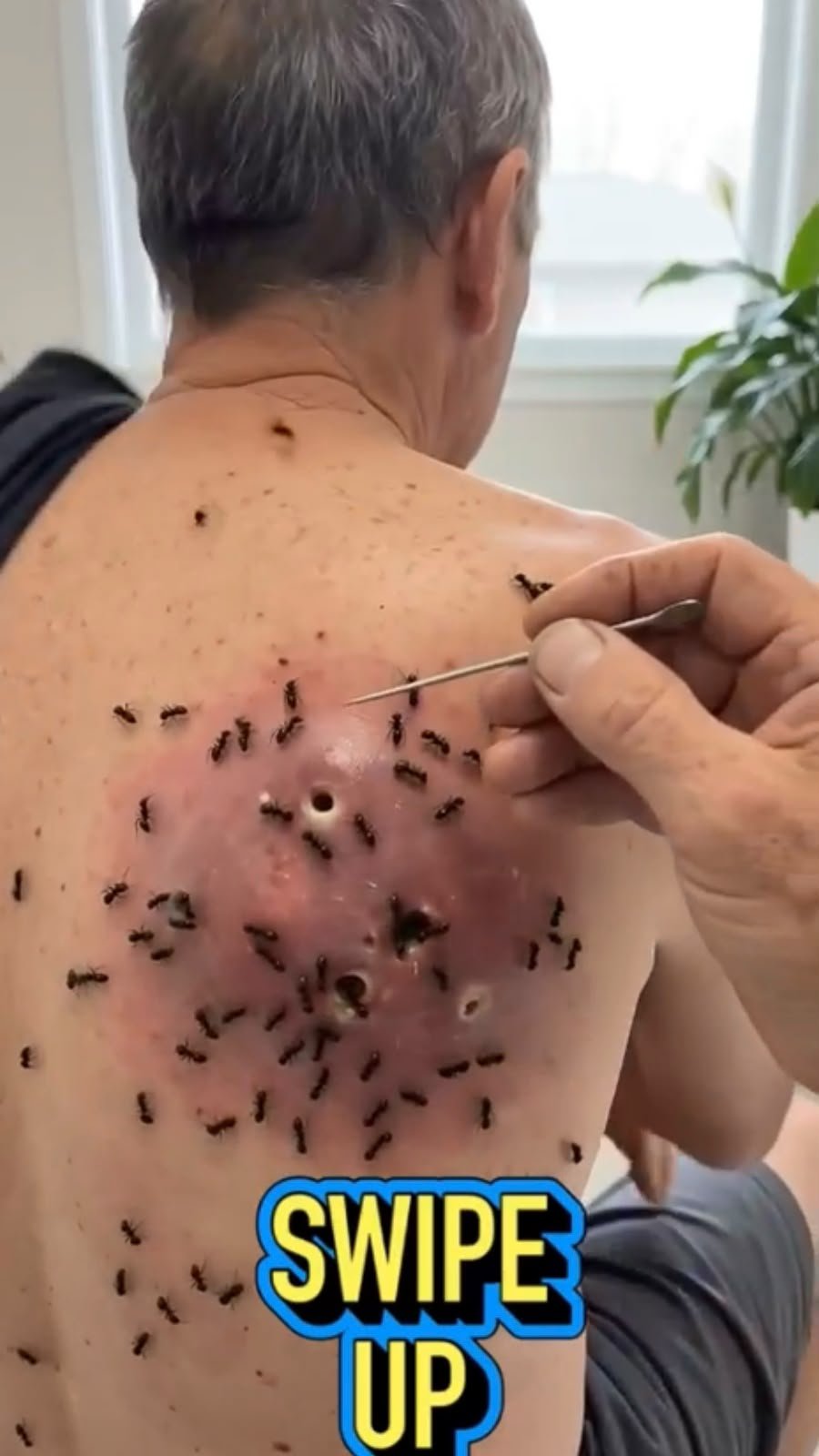
The image shows a large, inflamed area on the upper back with multiple small insect- or larva-like structures around an open lesion. A person appears to be examining the area with a tool.
The exact cause cannot be diagnosed from the photograph alone. However, if the structures are actually fly larvae (maggots) within a wound, the condition may represent myiasis, a parasitic infestation in which fly larvae live in or around human tissue. The CDC notes that untreated or open wounds can increase the risk of myiasis, particularly in tropical and subtropical regions.
What Is Myiasis?
Myiasis occurs when fly larvae infest human tissue. Some flies deposit eggs in or near wounds, and the larvae can subsequently develop in the affected area.
Depending on the species and location, the infestation can cause a lump, irritation, pain, drainage, or visible movement of larvae.
Importantly, the image alone cannot establish that this is myiasis. Some visual content circulating online may also be staged, edited, or depict a different skin condition.
Why an Open Wound Can Attract Flies
Open or untreated wounds can provide an opportunity for certain flies to deposit eggs. The CDC identifies uncovered or untreated wounds as an important risk factor for myiasis.
This is one reason proper wound care is especially important when a person has a large, draining, or persistent skin lesion.
The Bigger Concern: The Underlying Wound
The surrounding skin in the photograph appears significantly inflamed. A wound with swelling, redness, drainage, or increasing pain can also be associated with a bacterial skin infection or abscess.
Large abscesses may require professional drainage, and some infections require antibiotics. Trying to squeeze or lance a deep lesion at home can spread infection into surrounding tissue.