
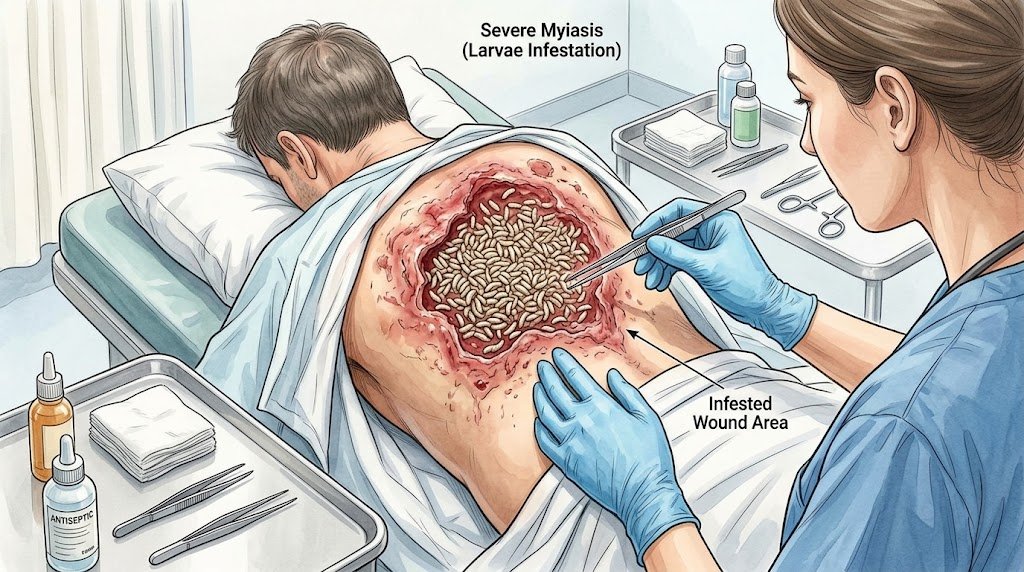
🩺 Hundreds of Larvae Covering a Severe Back Wound: A Shocking Case of Possible Myiasis
The image shows a large, severely inflamed area on the upper back with multiple open-looking points and numerous small dark insect- or larva-like structures across the surrounding skin. A person appears to be carefully removing some of them with a medical instrument.
Although the exact organisms cannot be identified from an image alone, this type of presentation can be consistent with wound myiasis—an infestation in which fly larvae develop in or around damaged tissue. Open or untreated wounds can increase the risk, particularly in tropical and subtropical environments. CDC
🚨 Why This Condition Can Become Serious
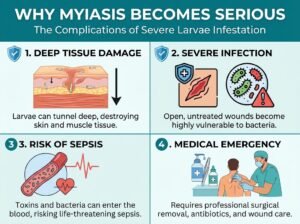
Myiasis is more than a surface-level skin problem. Depending on the fly species, larvae may remain near a wound or penetrate deeper into tissue. Some serious forms can cause rapidly worsening wounds, significant pain, swelling, bleeding, foul odor, and secondary bacterial infection. CDC
The dramatic appearance of the wound in this image is therefore a strong reminder that unusual movement, larvae, or insects around an open wound should never be ignored.
🏥 How Is It Treated?
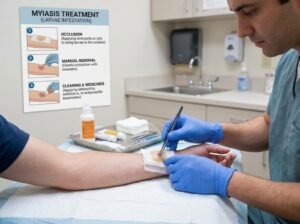
Treatment depends on the type and location of the infestation, but healthcare professionals generally focus on removing the larvae and properly cleaning and caring for the wound. In some cases, surgical removal may be necessary. Doctors may also evaluate the wound for secondary bacterial infection. CDC
Do not attempt aggressive extraction at home. If live larvae are visible in a wound, prompt medical evaluation is the safest option. CDC
🛡️ 5 Important Safety Tips
- Keep wounds clean and covered.
- Seek medical care for unusual movement or larvae in a wound.
- Don’t squeeze, cut, or dig into an infected wound yourself.
- Protect open wounds from flies and other insects.
- Watch for increasing pain, swelling, bleeding, foul odor, fever, or spreading redness.
🔎 Final Takeaway
What looks like a shocking collection of tiny insects may represent something medically significant, especially when associated with a large or open wound. Early professional assessment can help identify the cause, remove any infestation safely, and prevent deeper tissue damage or infection.
Medical disclaimer: An image alone cannot confirm myiasis, identify the species involved, or establish a diagnosis. Any real wound showing larvae or rapidly worsening inflammation should be evaluated by a healthcare professional promptly.