
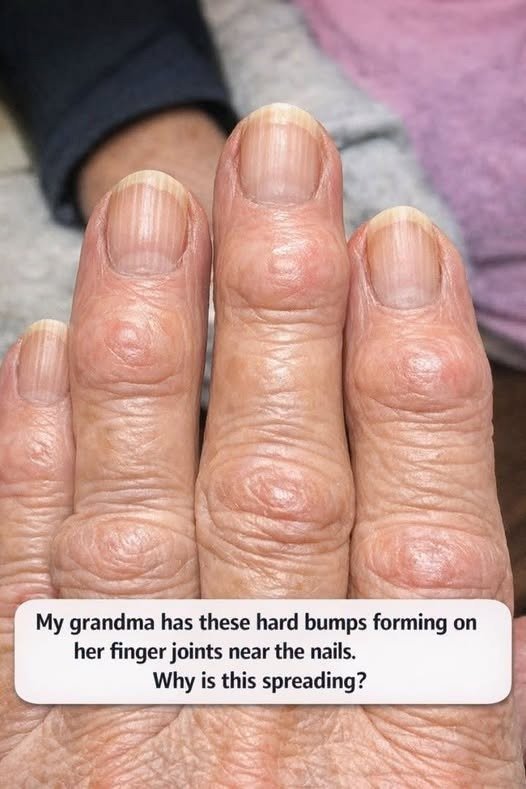
My grandma has these hard bumps forming on her finger joints near the nails. Why is this spreading?
As we age, changes in our hands can become more noticeable, including hard bumps that develop on the finger joints closest to the nails. These bumps are often Heberden’s nodes, bony enlargements commonly associated with osteoarthritis. They form when cartilage wears down and the bones within the joint rub together, prompting the body to create extra bone, or osteophytes, to stabilize the area. The result can be visible bumps, stiffness, discomfort, and changes in finger shape.
Heberden’s nodes commonly affect the distal finger joints and may appear on several fingers over time. Their development is influenced by age, genetics, and gender, with women, particularly after menopause, being more likely to experience them. Repetitive use and stress on the hands may also contribute to symptoms. Although these bumps are usually linked to osteoarthritis, similar changes can occur with other joint conditions, so sudden swelling, severe pain, or symptoms such as fatigue or fever should not be ignored.
Doctors can usually identify Heberden’s nodes through a physical examination and by discussing symptoms and family history. X-rays may be used to assess cartilage loss, bone changes, and other signs of osteoarthritis or to rule out different conditions. Treatment generally focuses on relieving discomfort and maintaining hand function. Depending on the individual, options may include appropriate pain medication, warm or cold compresses, splints, and gentle exercises that preserve flexibility and strength.
For an older loved one, simple daily habits can make hand problems easier to manage. Using arthritis-friendly tools, avoiding excessive strain, and performing gentle stretches can help protect joint function. If the bumps become increasingly painful, change rapidly, interfere with everyday activities, or fail to improve with basic care, consulting a healthcare professional is important. A specialist can determine the underlying cause and recommend appropriate treatment to help preserve comfort, mobility, and quality of life.