
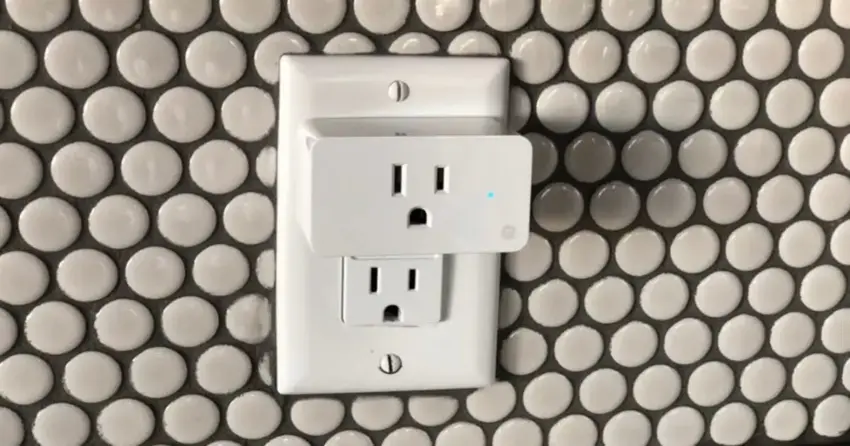
The Upside-Down Outlet Mystery
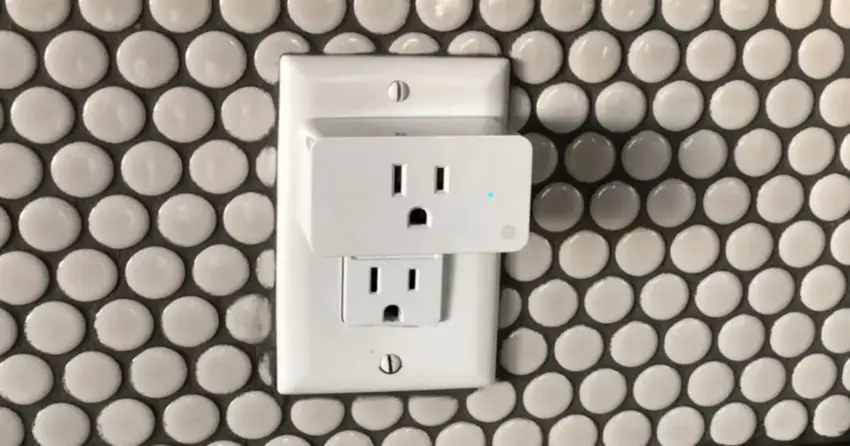
You are unpacking a vintage ceramic table lamp, carrying it over to that cozy nook by the living room window, and bending down to plug it in. That is when you see it: the wall receptacle looks like a startled face staring back at you upside down. The two vertical prongs sit on bottom, while the round grounding hole sits proudly at the top.
Your first instinct might be to sigh and wonder which previous homeowner or rushed contractor messed up an afternoon DIY project. In modern residential construction, that flipped look is rarely an accident. An upside-down outlet is often an intentional visual cue designed to save you from fumbling across dark rooms.
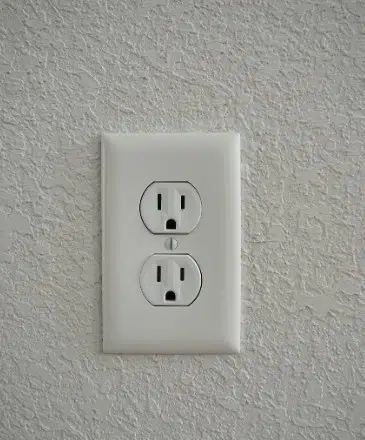
A standard duplex wall receptacle installed with the ground pin facing down on a textured drywall finish.
The Mystery of the Switched Outlet: Why Your Wall Plug Is Inverted
The single most common reason for an upside-down outlet in a house, condo, or townhome comes down to lighting control. In many living rooms, guest bedrooms, and home offices built before overhead ceiling fixtures became standard, electricians installed switched receptacles. These outlets connect directly to a standard wall switch near the entry door.
Instead of walking into a pitch-black room and bumping your shins against the coffee table to find a tiny turn-knob on a floor lamp, you flip the switch at the doorway. Electricity flows instantly to the outlet, and your lamp lights up the room. Electricians deliberately flip that specific outlet upside down during installation to give homeowners an immediate visual breadcrumb.
When you walk into a room with six identical white plastic plates, the flipped one tells you exactly where your favorite reading light belongs. It prevents the frustration of guessing which plug reacts to the wall switch.
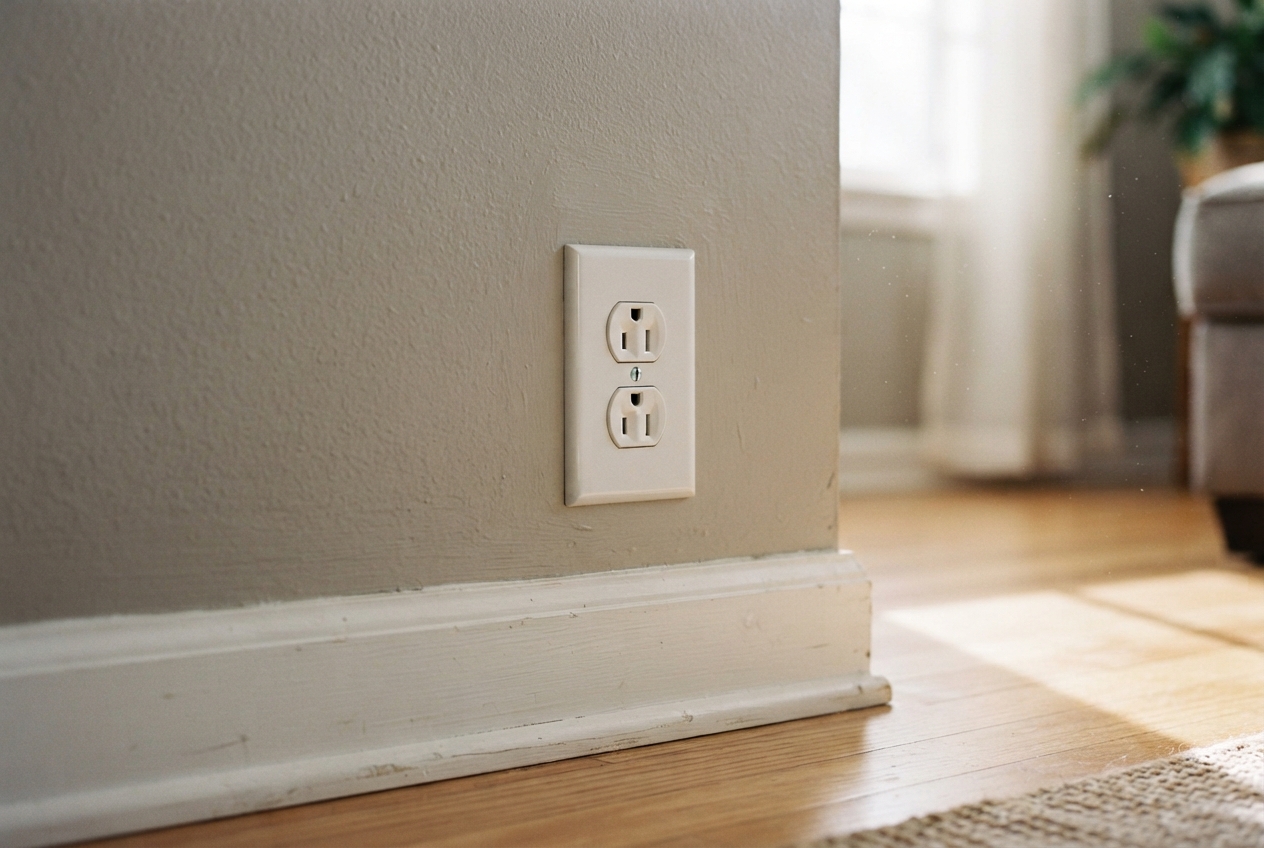
A modern ground-up outlet installed securely along a warm oak baseboard.
How Split-Receptacle Wiring Keeps Your Electronics Running
You might wonder what happens to your phone charger or Wi-Fi router if you plug it into that same switched wall plate. Modern switched outlets are rarely all-or-nothing. Electricians use what the trade calls a split-receptacle or half-hot circuit.
Behind that plastic plate, a standard duplex receptacle has two brass terminal screws connected by a tiny metal break-off tab. When an electrician snaps that tab off with a pair of needle-nose pliers, they divide the top and bottom sockets into two completely independent circuits:
- The Switched Half: Wired through the wall switch, designed specifically for accent lighting, bedside lamps, or floor lamps.
- The Constant-Hot Half: Remains energized 24 hours a day, providing continuous power for your phone dock, white noise machine, air purifier, or alarm clock.
A quick rule of thumb for older properties: if only one half of the receptacle is flipped or if the whole plate is inverted, plug your electronics into the bottom socket first to see if it stays powered regardless of the switch position.
The Commercial Safety Argument: Why Ground-Up Is Actually Safer
While switched lighting explains most residential flipped outlets, there is a second reason rooted entirely in electrical safety. Have you ever spent time in a modern hospital room, medical center, or high-end commercial office and noticed that every single plug is turned ground-pin up? That is not an accident, and it has nothing to do with wall switches.
Think about how a standard three-prong power cord hangs when it is partially pulled out from the wall. The metal prongs carrying live 120-volt current (the hot and neutral blades) are slightly exposed. If a metal picture-hanging wire, thin sheet of aluminum foil, hairclip, or metal picture frame falls down the wall and slips behind that loose plug, bad things happen.
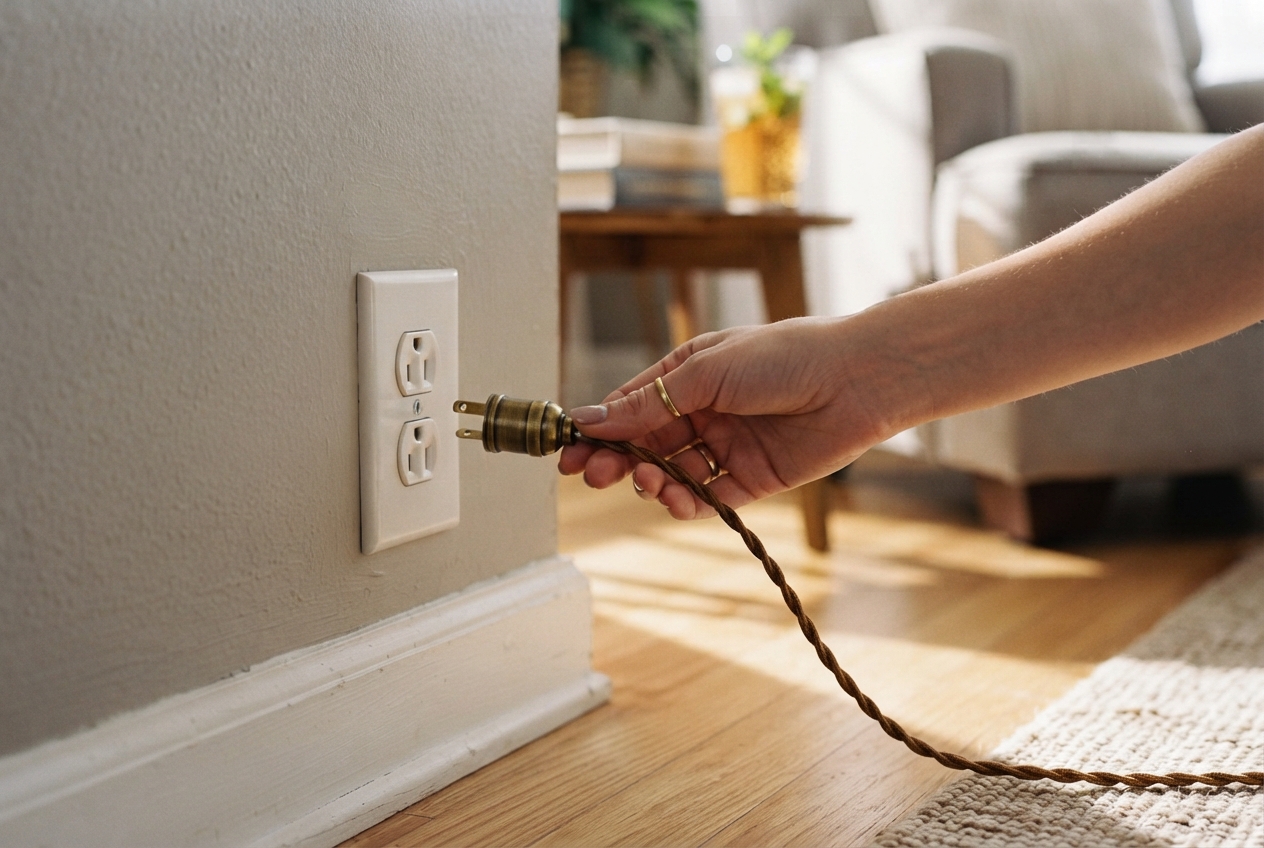
Testing the switched half of a duplex receptacle using a cozy reading lamp.
In a traditional ground-down orientation, that falling piece of metal bridges the gap between the energized hot blade and the neutral blade, causing an instant short circuit, a bright spark, and a tripped breaker. In a ground-up orientation, the falling metal hits the solid, unenergized grounding pin first. The grounding pin acts as a physical shield, deflecting the falling object harmlessly away before it can touch the live current.
For commercial kitchens, high-traffic medical wings, and woodworking shops where loose metal tools or utensils move around constantly, ground-up installation is standard operating procedure.
What Does the National Electrical Code Actually Say?
There is a stubborn myth floating around hardware store aisles that installing an outlet upside down violates local building regulations. The National Electrical Code (NEC)—specifically Article 406 covering receptacles—does not dictate whether a duplex outlet must sit with the ground pin facing up, down, or sideways.
Inspectors care about proper wire gauge, secure grounding paths, box volume, and whether you have installed Tamper-Resistant (TR) or Ground-Fault Circuit-Interrupter (GFCI) protection where moisture is present. The physical rotation of the yoke is left entirely to installer preference and local jurisdiction habits.
Some regions have local municipal amendments that favor ground-up installations for added safety. In most residential suburbs, electricians default to the familiar two-eyes-and-a-mouth ground-down position simply because homeowners expect it.
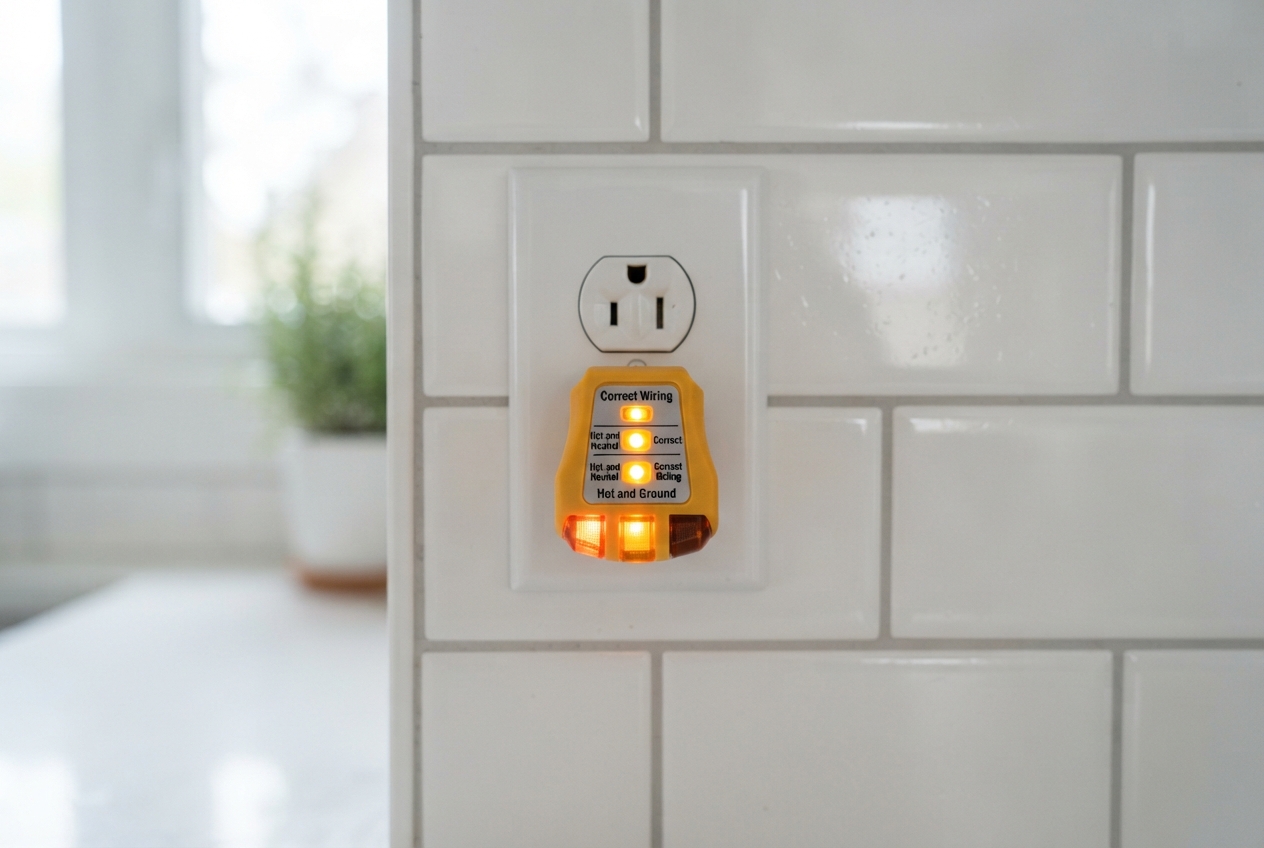
A simple three-prong circuit tester confirms proper wiring and ground polarity.
How to Safely Test and Map Your Switched Outlets
If you recently moved into a new home or rearranged your living room layout, identifying which outlets connect to those mysterious blank wall switches is simple. You do not need to pull off cover plates or expose yourself to copper wire to solve the riddle.
- The Quick Lamp Test: Grab a lightweight table lamp. Turn the lamp switch to the “on” position, plug it into the top socket of the suspected outlet, and toggle nearby wall switches one by one. If nothing happens, move the plug down to the bottom socket and repeat the test.
- The $5 Receptacle Tester: Pick up a standard three-prong circuit tester from your local hardware store. Plug it into each socket and observe the two amber indicator lights. Flip your wall switches; when the lights extinguish, you have identified the switched half of your circuit while verifying that your neutral and ground wires are wired correctly.
- Look Near Room Corners: Switched outlets are almost always placed where an interior designer or architect anticipated a reading chair, sofa end table, or sideboard. Check the perimeter walls three to four feet away from doorways and room corners first.
Smart Home Upgrades vs. Switched Outlets: What to Avoid
In our era of smart plugs, app-controlled LEDs, and smart speakers, switched outlets can occasionally cause minor headaches. If you plug a Wi-Fi-enabled smart bulb or a smart streaming speaker into the switched half of an outlet, flipping that wall switch cuts main power to the device’s internal antenna.
Every time someone instinctively hits the wall switch by the entryway, your smart device disconnects from the home network, forgets its schedule, or starts blinking an error sequence when powered back up. If you use smart home gear, keep your bridge hubs and automated bulbs plugged firmly into the constant-hot half of the outlet.
For floor lamps running smart bulbs, place a clear magnetic switch guard over your wall plate. It keeps family members and houseguests from accidentally cutting the power to your automated lighting setup while keeping the original wiring intact.
Can You Turn an Inverted Outlet Right-Side Up?
Staring at an inverted wall plate might bother your sense of symmetry, especially if it sits right next to a series of standard plugs along a clean living room baseboard. You can change its orientation, but it is not just a matter of loosening the front decorative plate.
Flipping an outlet requires cutting the breaker at your main service panel, confirming the circuit is dead with a reliable non-contact voltage tester, unscrewing the mounting yoke, and physically rotating the internal mechanism 180 degrees. If the outlet is split-wired, you must ensure the hot wires, switched legs, and bare copper grounding pigtails fold neatly back into the electrical junction box without pinching.
If you live in a rental apartment or an older home with brittle cloth wiring, leave the outlet as it sits. A flipped outlet is doing its job as a quiet, functional signal that your house was built with thoughtful convenience in mind.