
Painful Lip Infection Case — Why Early Treatment Matters
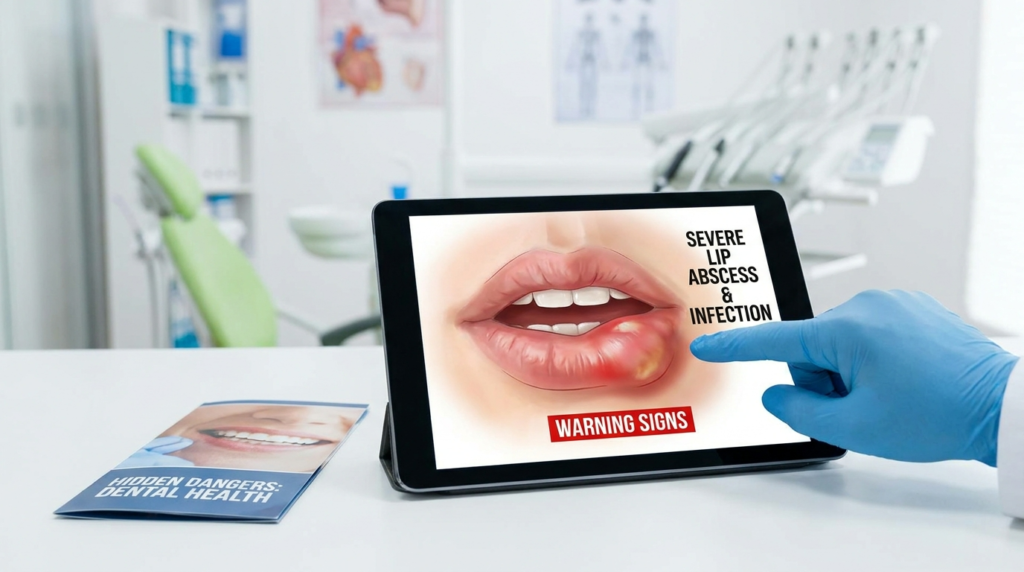
At first glance, it may look like a simple swelling on the lip. But in reality, this condition can be far more serious than it appears. The image above shows a severe lip abscess, where infection has built up beneath the skin, causing extreme swelling and visible damage.
A lip abscess forms when bacteria enter through a small cut, blocked pore, or infected hair follicle. Over time, pus begins to collect under the skin, leading to pressure, pain, and inflammation. If not treated properly, the infection can spread to nearby tissues and become dangerous.
What Causes This Type of Infection?
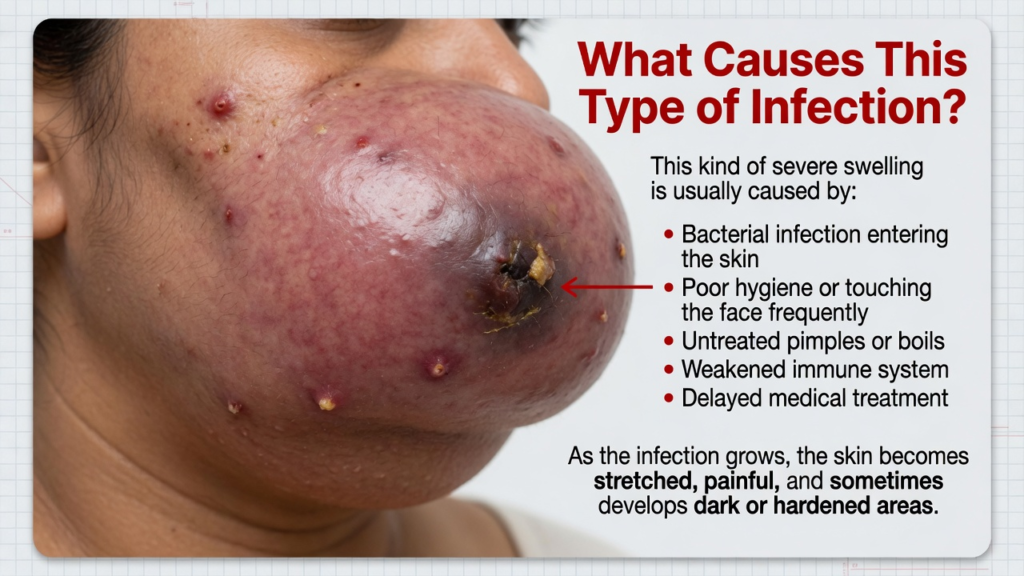
This kind of severe swelling is usually caused by:
• Bacterial infection entering the skin
• Poor hygiene or touching the face frequently
• Untreated pimples or boils
• Weakened immune system
• Delayed medical treatment
As the infection grows, the skin becomes stretched, painful, and sometimes develops dark or hardened areas.
How Doctors Treat Severe Lip Abscess
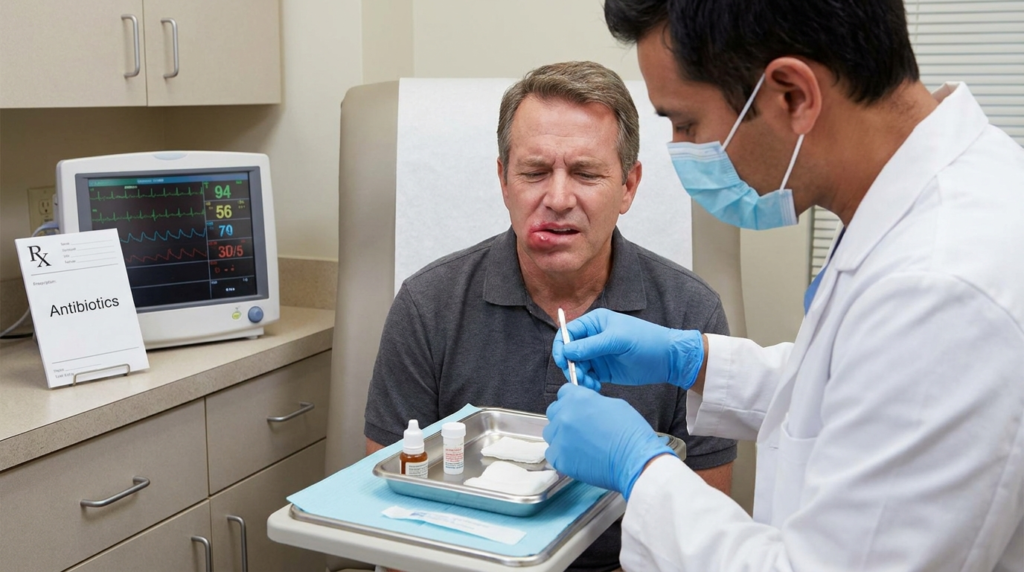
In cases like this, professional treatment is necessary. Doctors may:
• Drain the pus safely using sterile tools
• Prescribe antibiotics to control infection
• Clean and disinfect the affected area
• Monitor healing to prevent recurrence
Trying to treat such infections at home can make things worse.
5 Important Tips to Prevent Lip Infections
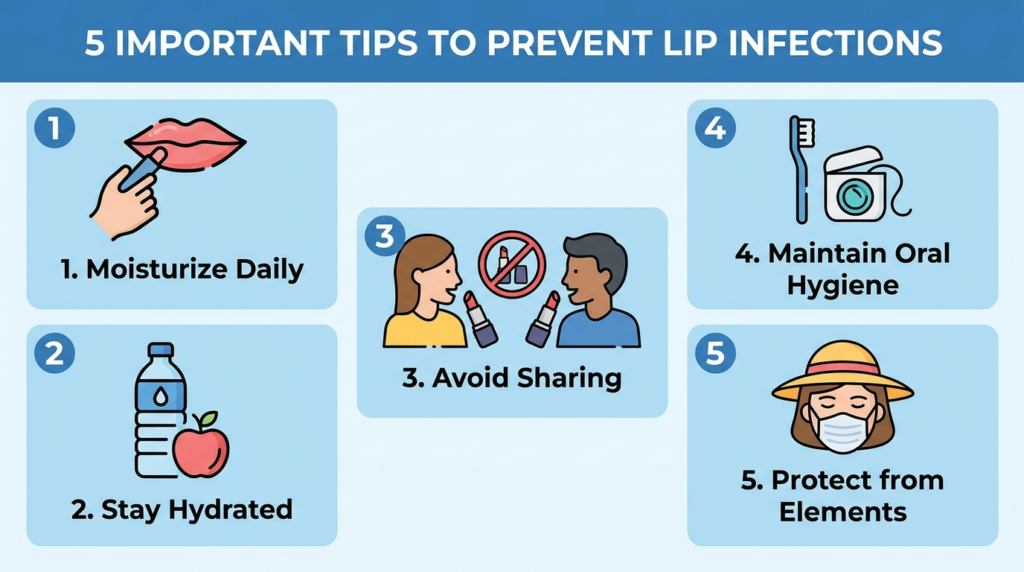
1. Avoid Touching Your Face Frequently

Hands carry bacteria that can easily infect sensitive skin areas.
2. Treat Small Pimples Early
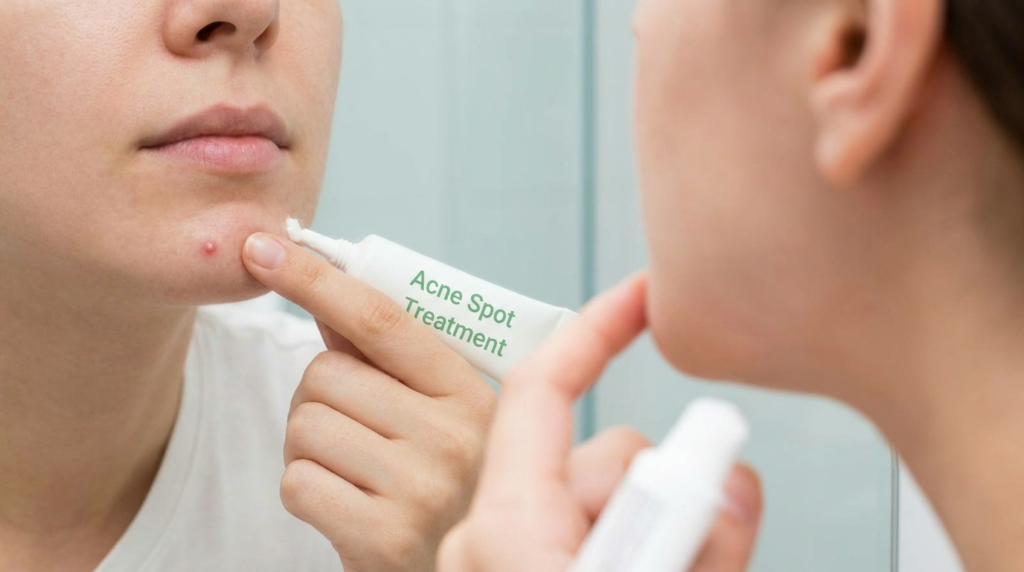
Don’t ignore minor skin issues — early care prevents serious infections.
3. Maintain Good Hygiene

Regular washing and clean habits reduce bacterial growth.
4. Never Squeeze Painful Swellings
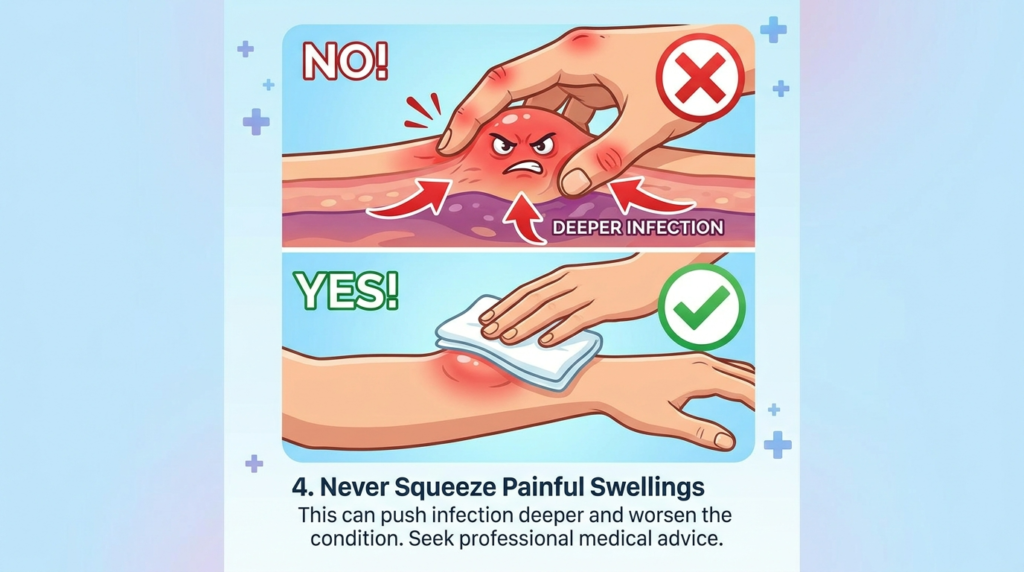
This can push infection deeper and worsen the condition.
5. Seek Medical Help Immediately
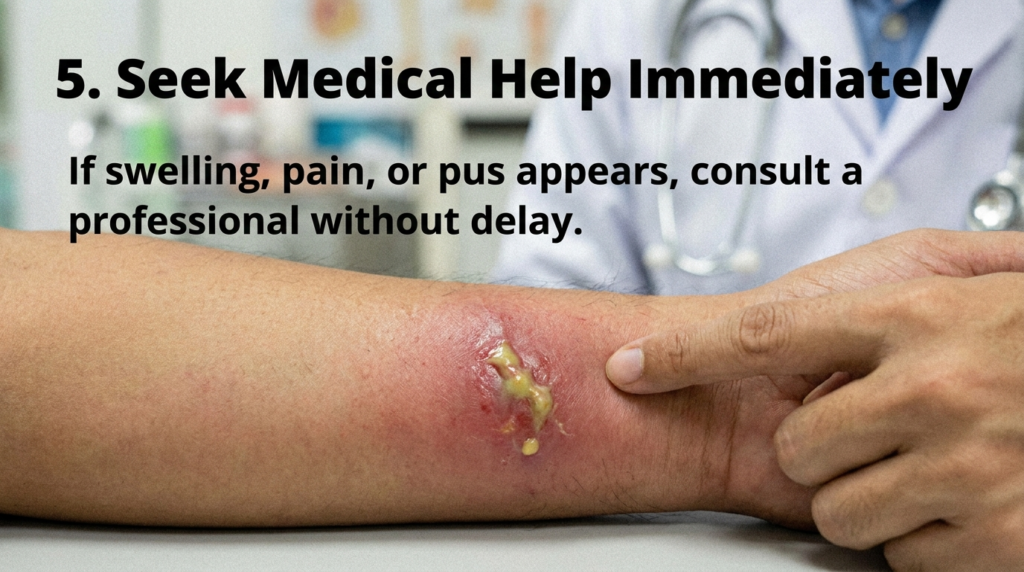
If swelling, pain, or pus appears, consult a professional without delay.
Final Thoughts
What may seem like a small skin problem can quickly turn into a serious medical issue if ignored. This case is a powerful reminder that early attention and proper care can prevent severe complications.