
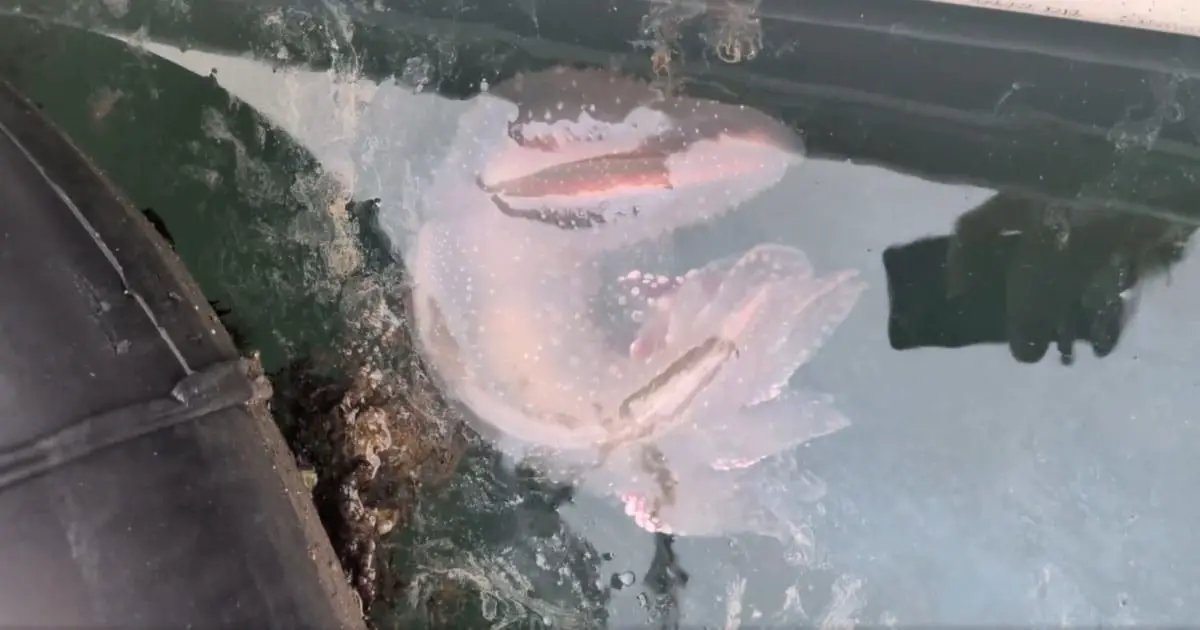
Mysterious Creature Found in Water Looks Like Something From Another Planet
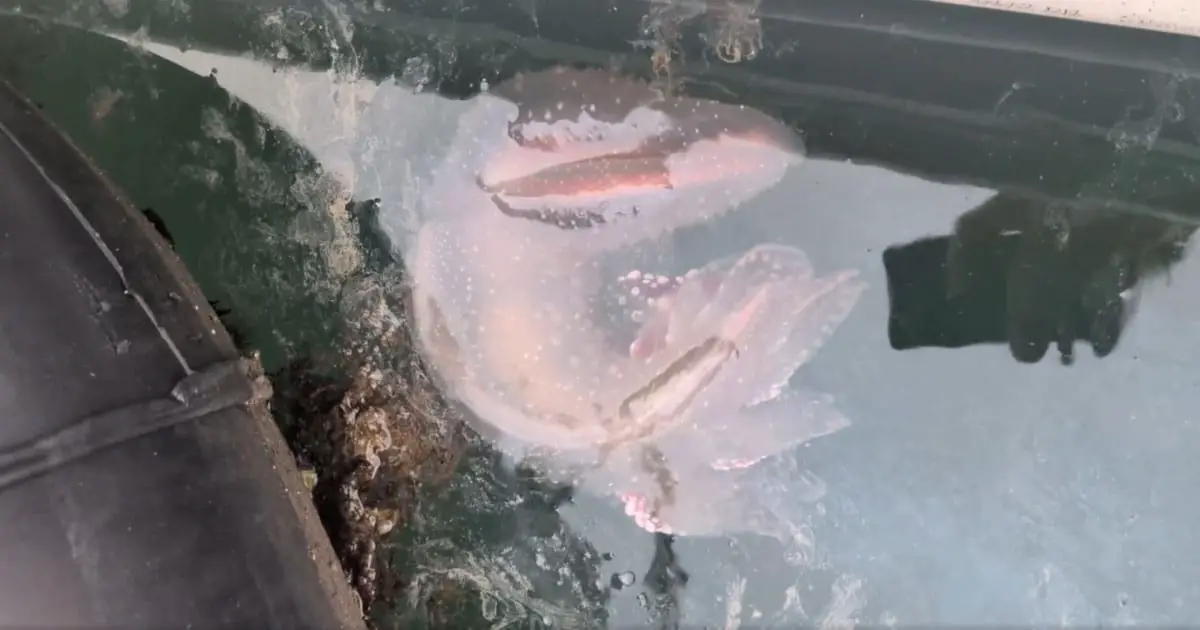
Melibe japonica is an extraordinary sea slug that can grow longer than a human forearm. It is see-through and pink-flecked, drifting through the water with a transparent net folded over its face. Its unusual appearance can make it difficult to recognize as a sea slug at first glance. It has no rasping tongue like the one many other sea slugs use to feed. Yet it hunts, catches live prey, and swallows small animals whole. Its secret is the enormous hood at the front of its head. This specialized structure acts like a living net, trapping prey before the slug consumes it. Here is how an animal this odd actually makes a living.
A Sea Slug You Can See Straight Through
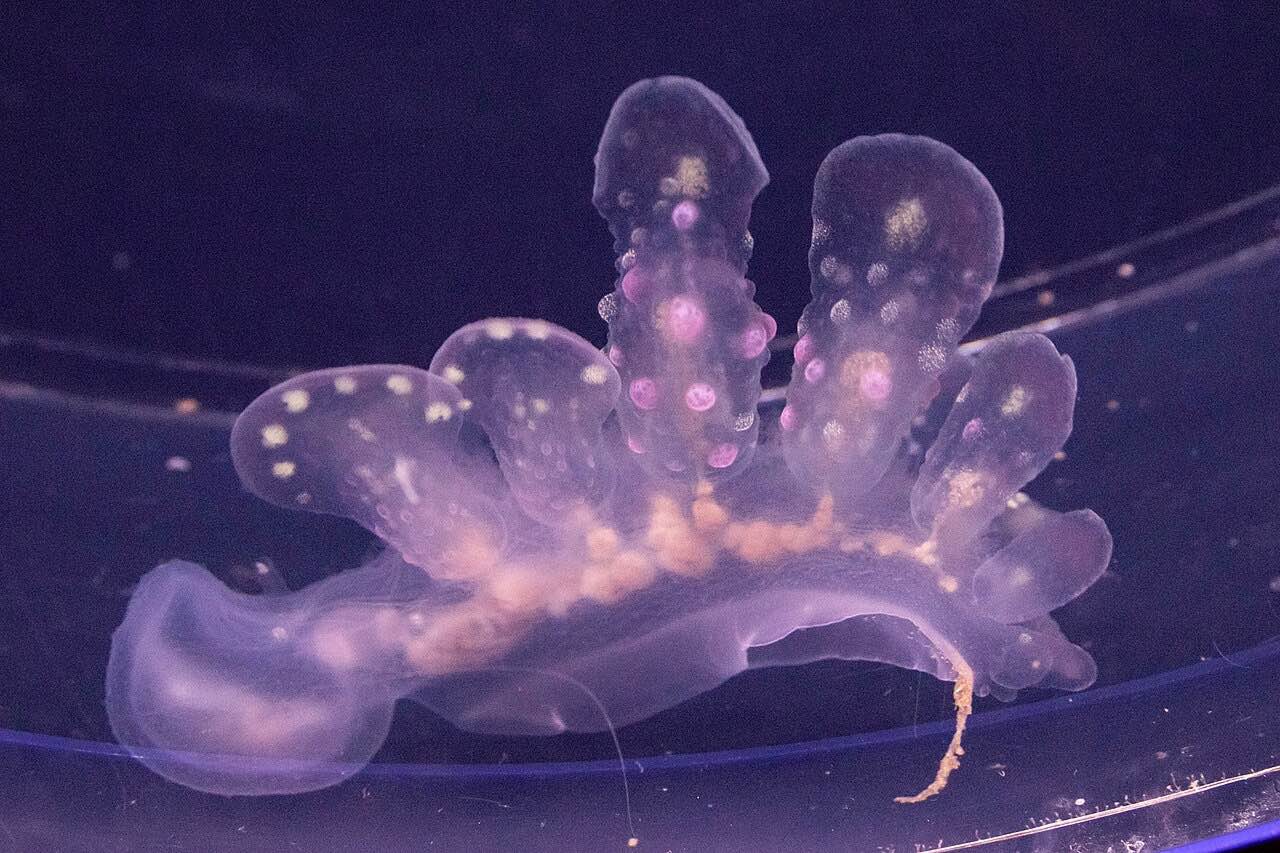
The body is translucent, a soft pinkish-white. Reddish and pink tubercles dot it, along with a line of fine branching papillae running down the midline. Six or seven pairs of rounded, pouch-like cerata sit along its back, sometimes as many as ten. These give the animal its lumpy, otherworldly outline. There is no shell, no armor, nothing hard to catch the light.
Melibe japonica occurs across the Indo-West Pacific, with documented records from Japan, Korea, Pakistan, and Queensland, Australia. Its size is just as remarkable as its appearance. Scientific descriptions report that this species can reach up to 70 centimeters in length, making it an exceptionally large sea slug. Earlier observations also describe individuals measuring around 50 centimeters, although the size of any particular animal cannot be determined from photographs alone.

How Melibe Japonica Catches Prey Without a Tongue
Many sea slugs use a specialized ribbon of tiny teeth, called a radula, to scrape or process food. Melibe japonica lacks this feeding structure entirely, as do other members of its genus. Instead, it relies on a remarkably different way of catching prey.
The front of the head forms a large oral hood, ringed with sensory papillae that read the water around it. The animal sweeps that hood forward and down. It spreads the hood over an area where small prey may be present, much like a fisherman casting a net. When small prey enters the hood, the slug closes it and draws the catch toward its mouth. Researchers have observed Melibe japonica feeding on brine shrimp larvae in aquariums, suggesting that small crustaceans are also part of its natural diet. Watch one feed and the movement looks less like a slug and more like a slow, deliberate magic trick.
The Body Part It Can Throw Away and Grow Back
Those pouchy cerata along its back do more than look peculiar. The animal can shed these appendages through a process called autotomy and later regenerate them. For a soft-bodied creature without a protective shell, this ability may serve as a defense against predators.

It does not move the way you might picture a typical sea slug moving. Rather than swimming rapidly through repeated body movements, Melibe japonica is often observed floating in mid-water. It may also descend to the seabed to search for prey. The net comes out, the hunt begins, and the whole performance happens in near silence.
Named in 1913 From a Single Specimen
The animal entered the scientific record in 1913, when Charles Eliot described it from a single specimen collected near Numazu, Japan. He characterized its appearance as transparent yellowish-white with reddish coloring in some areas. Later researchers added important details: Hirase reported its impressive size and pinkish coloration in 1947, while Kikutaro Baba expanded the anatomical description in 1949. These historical accounts eventually became important reference points for researchers investigating the species’ identity.
Melibe japonica belongs to a genus of unusual sea slugs found in temperate and tropical seas around the world. Its classification has a complicated history, with researchers debating whether it was distinct from the similar Melibe viridis. A 2024 study supported recognizing Melibe japonica as a separate species, while the World Register of Marine Species now lists Melibe mirifica as one of its synonyms. If you enjoy creatures that look too peculiar to be real, the same reaction greets a moth whose wings look hand-painted and sheep that look like living stuffed toys.
Despite its extraordinary appearance, Melibe japonica is a real sea slug documented by marine biologists. Its unusual feeding method shows how remarkably diverse life beneath the ocean’s surface can be. What looks like an alien creature is actually an extraordinary example of adaptation in the natural world.