
😲 An Unusual Dark Growth Is Sticking Out From the Chin — What Could It Be?
A strange-looking skin growth can become a surprising discovery, especially when it develops in the middle of the face. Some bumps remain small for months, while others gradually become thicker, darker, or more noticeable.
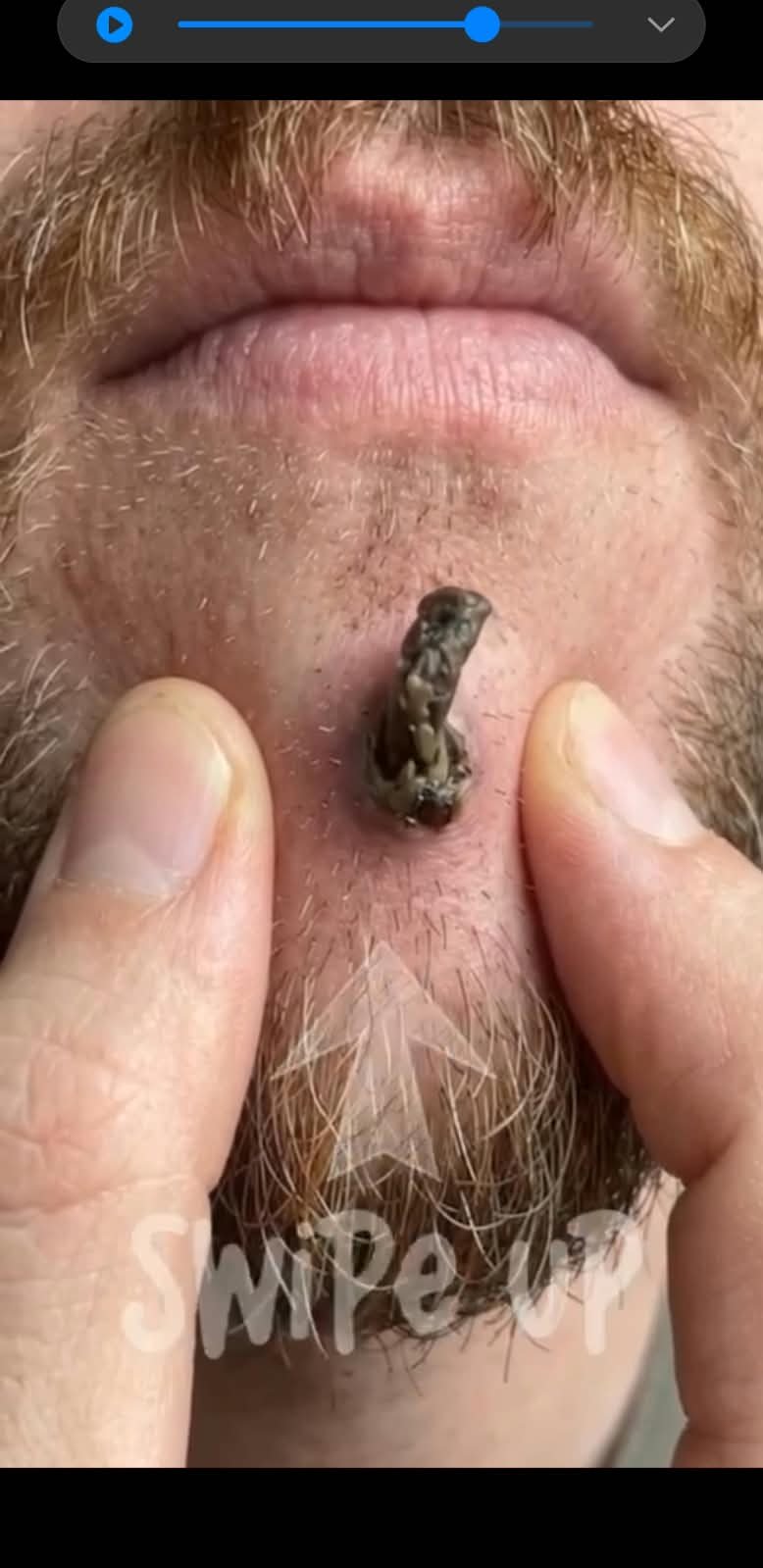
The image shows an unusual dark, raised structure emerging from the skin beneath the lower lip. Its irregular appearance raises questions about what may be happening beneath the surface.
Could it be a thick keratin buildup, a wart-like growth, or an unusual skin cyst?
Although the appearance is striking, a photograph alone cannot establish the diagnosis. Several different skin conditions can produce similar-looking growths.
What Could Cause a Growth Like This?
There are several possibilities worth considering:
1. A Wart-Like Skin Growth
Some warts develop a rough, thick, or irregular surface. They can appear brown, gray, black, or skin-colored. Certain types also develop an elongated shape.
2. A Skin Cyst With Accumulated Keratin
An epidermoid cyst forms when skin cells become trapped beneath the surface. It can collect keratin, creating a lump that sometimes has a dark opening in its center.
3. A Thickened Skin Lesion
Some benign skin growths become rough, raised, and darker over time. However, other conditions can resemble them, so professional examination is important.
4. A Crusted or Damaged Skin Area
Dried blood, hardened skin material, or a crust over an irritated lesion can sometimes create an unusual appearance.
The exact cause cannot be determined simply by looking at the image.
Why Should a Dark Growth on the Face Be Examined?
Not every dark skin growth is dangerous. Many are harmless, but a new, changing, bleeding, or unusually shaped lesion deserves attention.
Facial skin is delicate, and attempting to remove an unknown growth can cause bleeding, infection, scarring, or delayed diagnosis.
A dermatologist may examine the area closely using a dermatoscope. If the appearance is uncertain or concerning, a small biopsy may be recommended to identify the tissue.
The American Academy of Dermatology explains that some skin conditions can look like warts, including conditions that require a different diagnosis and treatment.