
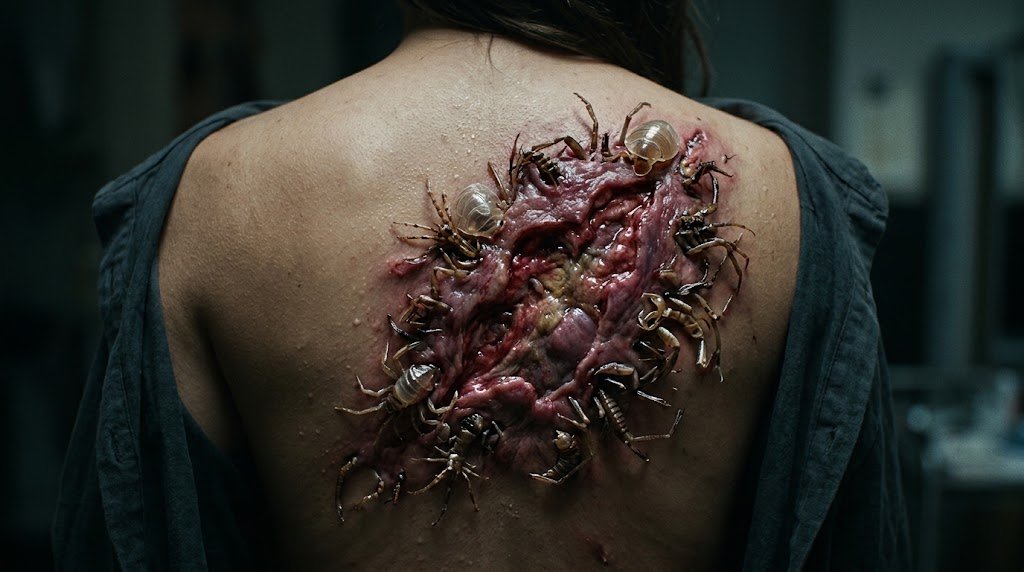
😱 A Severe Back Wound Surrounded by Insect-Like Structures: What Could Be Happening?
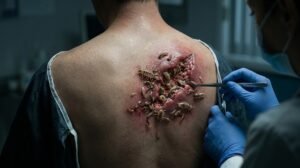
The image shows a large, swollen, reddish-purple area on a man’s upper back, with several open-looking spots and numerous dark insect-like structures scattered across the skin. A person appears to be examining the affected area with a pointed instrument.
The appearance is alarming, but the image alone cannot confirm whether these structures are insects, larvae, or something else. The wound itself appears significantly inflamed and would require careful medical assessment if real.
🔎 Could This Be a Serious Wound Infestation?
One possible condition doctors consider when larvae are present in damaged skin is wound myiasis. This occurs when fly larvae infest human tissue, sometimes entering through open wounds. Certain infestations can cause pain, swelling, tissue damage, and secondary bacterial infection. However, this image does not establish that myiasis is present.
Other possibilities for a severely swollen wound include a skin abscess, an infected cyst, or another inflammatory skin condition. A healthcare professional must examine the wound to determine the actual cause.
⚠️ Why Immediate Medical Attention Matters

A large, painful, swollen wound with multiple openings should not be ignored. If larvae are genuinely visible, or the wound is rapidly worsening, urgent medical assessment is important. Treatment may involve professional wound cleaning, removal of any larvae, and treatment of a secondary infection when necessary.
🏥 How Is a Wound Like This Treated?
Treatment depends on the underlying problem. A clinician may examine the affected skin, clean the wound, remove damaged tissue or foreign material when needed, and determine whether medication or further treatment is required.
Do not probe, squeeze, cut, or attempt to remove deeply embedded material at home. Cover the wound with a clean dressing and seek urgent medical care if this is a real situation.
🛡️ 5 Safety Tips for Protecting Skin and Open Wounds
- Keep wounds clean and covered with an appropriate dressing.
- Protect exposed wounds from flies and insects, especially in warm environments.
- Never dig into a wound with needles or sharp tools to remove suspected parasites or debris.
- Seek prompt medical attention if larvae, unusual movement, or a rapidly worsening wound is noticed.
- Watch for warning signs, including spreading redness, increasing pain, fever, swelling, or foul-smelling discharge.
✅ Final Takeaway
This image is a reminder that unusual skin changes and severe wounds deserve professional attention rather than risky home treatment. Early assessment can help identify the cause and reduce the risk of complications.
Medical disclaimer: This article is for educational purposes only. The image cannot confirm an infestation or establish a diagnosis. A real wound with visible larvae, severe swelling, or rapidly worsening symptoms requires prompt medical evaluation.