
When a Bee or Wasp Sting Leaves a Dramatic Skin Reaction: What You Should Know
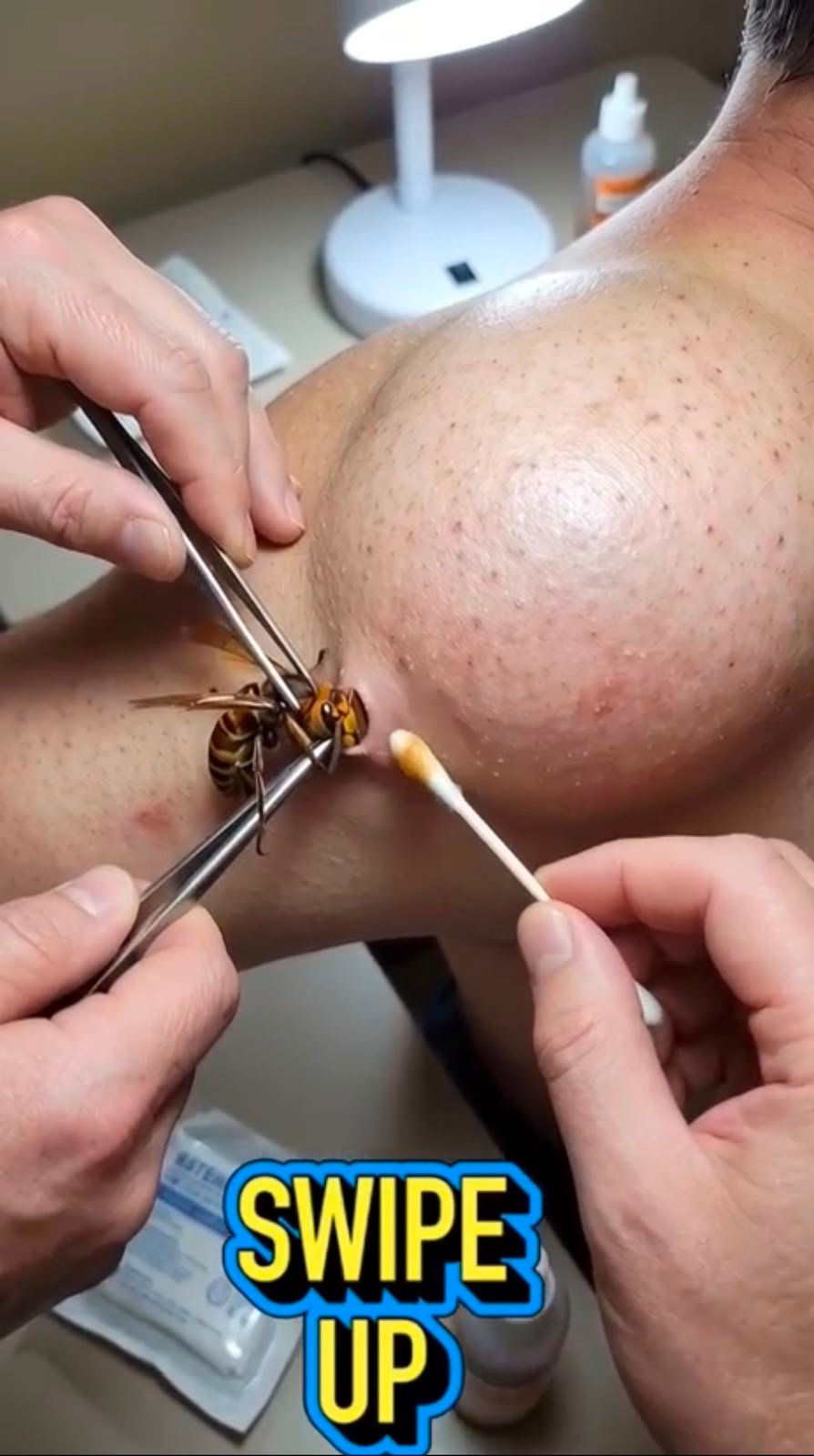
A routine outdoor moment can sometimes turn into an unexpectedly painful experience. The image above shows a close-up of an insect being carefully removed from the skin near the shoulder, highlighting how important proper handling can be when a sting or bite causes a strong local reaction.
While many insect stings cause only temporary pain, redness, and swelling, some reactions can become much more serious. Knowing the warning signs can help you decide when simple first aid is appropriate—and when professional medical attention is needed.
What Happens After an Insect Sting?
When a bee, wasp, or similar insect stings, substances released at the site can trigger inflammation. The area may quickly become:
- Red or flushed
- Swollen
- Warm or tender
- Painful or itchy
- Sensitive to pressure or touch
For some people, swelling can continue to increase during the first several hours before gradually improving.
The appearance of a sting can vary considerably depending on the insect, the location of the sting, and the person’s individual reaction.
Why Does the Area Become So Swollen?
Swelling is part of the body’s inflammatory response. Blood vessels around the affected area become more permeable, allowing immune-system components to reach the tissue.
A small sting may therefore produce a surprisingly large swollen area without necessarily indicating a dangerous reaction.
However, rapidly spreading swelling or symptoms affecting areas away from the sting deserve closer attention.
Bee Stings and Wasp Stings Aren’t Exactly the Same
One important difference is that honeybees can leave their barbed stinger behind, while wasps generally can sting repeatedly without leaving a stinger embedded in the skin.
If a visible stinger remains after a bee sting, it should be removed promptly rather than repeatedly squeezing or manipulating the surrounding skin.
The insect itself can be difficult to identify from a photograph, so it’s better not to assume the exact species based solely on appearance.