
When an Insect Becomes Embedded in the Skin: What This Unusual Image Reveals
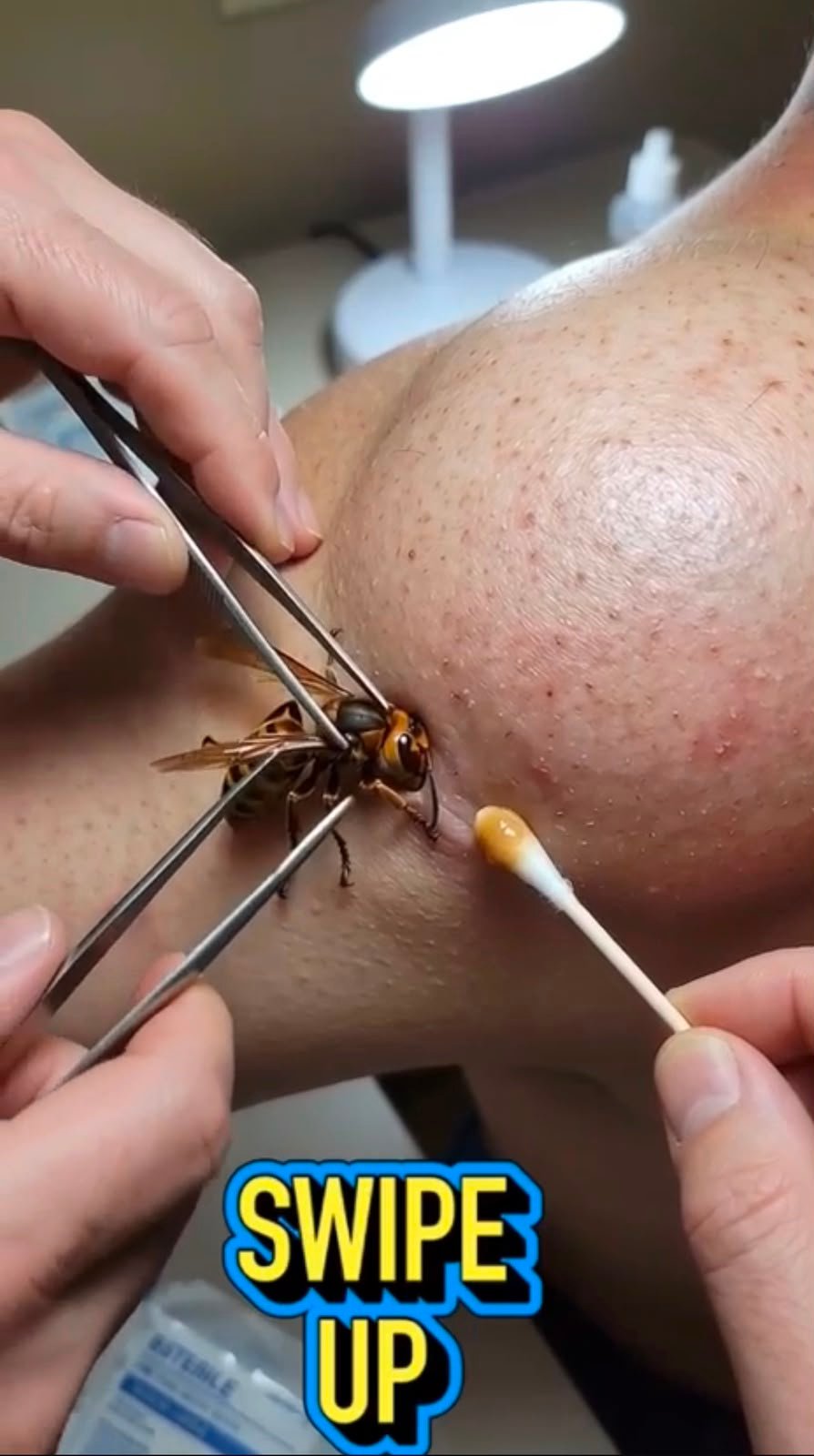
At first glance, the image looks almost unbelievable: a large, wasp-like insect appears to be attached tightly to the skin while several instruments are being used to remove it. A healthcare professional is also applying a substance near the affected area.
While dramatic clinical images can attract attention, the important question is what exactly happened—and why shouldn’t something like this be removed casually at home?
An Unusual Skin Encounter
The insect shown appears to be a large stinging insect, although its exact species cannot be reliably identified from the photograph alone.
The surrounding skin looks irritated, and the insect appears to have become firmly attached around the affected area. Situations involving insects on or in the skin can occur through stings, bites, accidental contact, or other circumstances.
Importantly, the photograph alone isn’t enough to determine whether the insect actually burrowed into the skin or simply became attached to it.
Why Does the Skin React?
When an insect bites or stings, the body’s immune system immediately begins responding.
Depending on the insect and the person’s sensitivity, the reaction can include:
- Redness
- Swelling
- Warmth
- Tenderness
- Itching
- Local inflammation
For some people, the reaction can become much more severe.
That’s why an apparently small insect injury shouldn’t automatically be dismissed if symptoms are progressing rapidly.
Why Are Medical Instruments Being Used?
The image shows instruments being used to control and remove the insect rather than simply pulling at it with bare fingers.
That can be important because different insects require different approaches. In particular, trying to crush, squeeze, or aggressively manipulate a stinging insect can potentially increase the risk of additional injury.
A medical professional can also inspect the skin afterward for retained material, tissue injury, or signs of infection.