
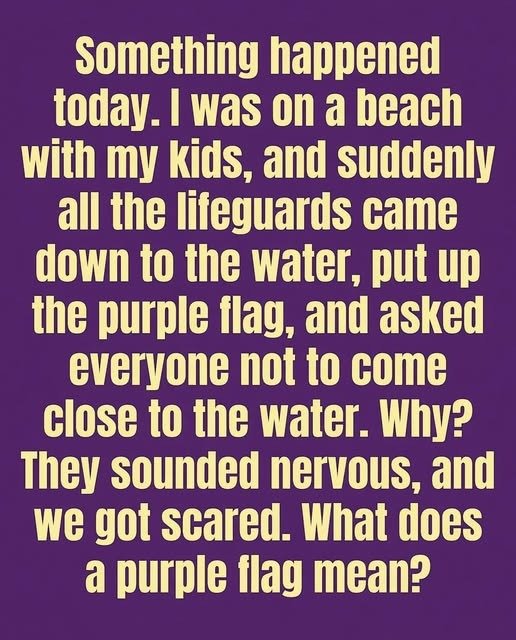
The Purple Flag at the Beach: What It Really Means and Why You Should Pay Attention See Why
A purple flag at the beach serves as an official warning that dangerous marine life—such as jellyfish, stingrays, or sea lice—is present in the water nearby. Seeing one is not a reason to panic, but rather a reminder to adjust your plans and stay aware.
Immediate Steps & Safe Options
-
Stop and Assess: Remain calm and acknowledge the flag. Never ignore the warning or assume it applies only to deeper water.
-
Consult Lifeguards: Approach the nearest lifeguard station to ask which specific species has been spotted so you know what risks to expect.
-
Select an Alternative Activity:
-
Stay on the shore to walk, sunbathe, or picnic.
-
Wade strictly in very shallow water while scanning your surroundings.
-
Wear protective gear like a full wetsuit if you choose to enter the ocean.
-
Relocate to a nearby beach that does not have an active warning flag.
-
Preparation & Beach Safety Tips
-
Check Conditions Early: Look up local weather and beach flag updates online before leaving home.
-
Practice the “Stingray Shuffle”: When walking in shallow water, slide your feet along the sandy bottom instead of taking steps. The vibrations give stingrays time to swim away.
-
Wear Protective Footwear: Use water shoes to safeguard your feet against hidden bottom-dwellers.
-
Never Touch Marine Life: Avoid touching sea creatures—even washed-up, dead jellyfish can still deliver a painful sting.
-
Never Swim Alone: Always swim with a partner, remain vigilant, and exit the water immediately if you feel anything brush against you.
Emergency First Aid for Stings
| Marine Creature | Immediate First Aid Action |
| Jellyfish | Exit the water, alert a lifeguard, and rinse the affected area with vinegar (never fresh water). |
| Stingray | Soak the sting in tolerably hot water to relieve pain and seek immediate professional medical attention. |
Important Things to Know
-
Beach Access: You can still visit the beach when a purple flag is up; simply stay out of the water.
-
Warning Duration: Flags can stay raised anywhere from a few hours to several days depending on marine activity.
-
Regional Differences: While common in the US, Australia, and Europe, warning systems vary worldwide. Look for graphic icons, text signs, or ask a local lifeguard if you are unsure of the rules.